
Most seafarers know that working at sea can mean paying less tax. Fewer know exactly how it works, whether they qualify, or what happens if they get it wrong. That’s where Fiona comes in.
Fiona runs the Flying Fish tax return service, specialising entirely in Seafarers’ Earnings Deduction.
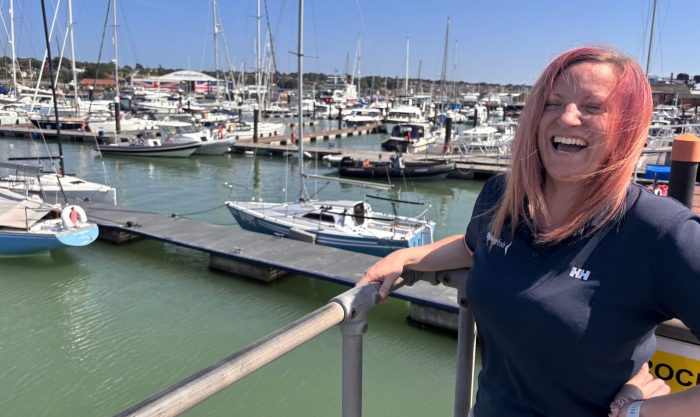
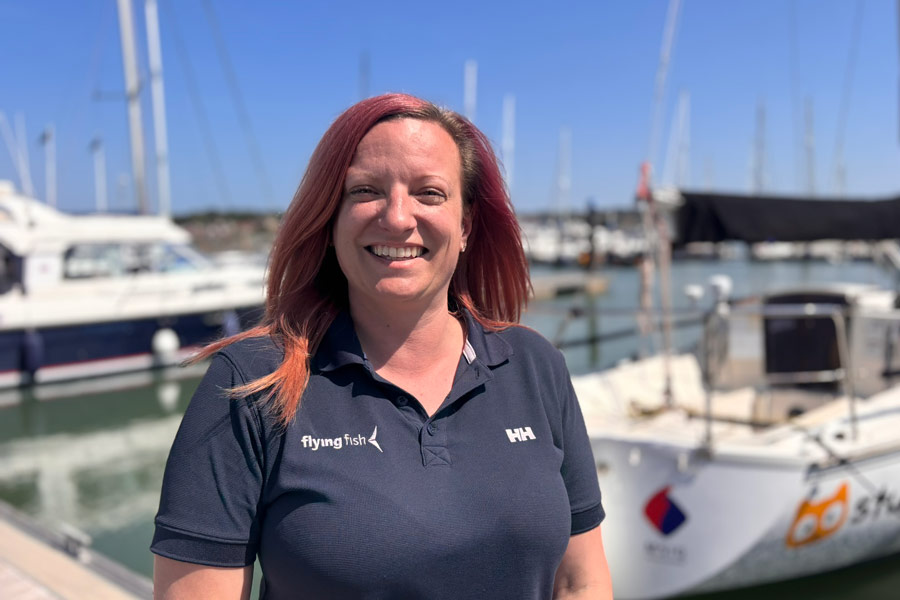
We sat down with Fiona to ask about her background, the questions she gets asked most, and what anyone claiming SED for the first time should know. (Spoiler: As you can see from the photo, she actually makes taxes look fun.)
How long have you been an accountant, and what do those letters after your name, MAAT, mean?
I started as a junior finance assistant in 2006, then worked my way up to management accountant in 2016.
Then I worked as an accounting technician for a local accountancy firm on the Isle of Wight, which is when I started working with seafarers for the first time. Before that, seafarers were just one type of client among many. I worked across all sorts of sectors, so I built up a wide understanding of tax issues, rules and regulations, not just the seafarer side of things.
I started training to become a qualified accountant in 2013, qualifying in 2023. MAAT means I’m a member of the Association of Accounting Technicians. It’s a recognised professional qualification, and it requires me to complete ongoing training to prove every year that my knowledge is current.
Tax rules change, HMRC guidance changes, and SED cases can be genuinely complicated, so that ongoing learning matters. I’m not working from what I learned a decade ago, I’m working from what’s true now.
Why do seafarers need a specialist accountant?
Your average accountant won’t know the specific rules around Seafarers’ Earnings Deduction, and that’s not a criticism of them, it’s just not something most accountants deal with regularly.
An average accountant might handle the tax affairs of one or two seafarers in a whole year, alongside dozens of clients with completely different circumstances. That’s not enough exposure to build up real depth of knowledge.
They can advise on the basics, but when a case gets complicated, and seafarer cases can do, they don’t have the reference points a specialist has.
Then there’s the practical side, which people don’t always think about.
Seafarers are at sea, working patterns are unusual and they are often without mobile data or easy access to email for weeks at a time.
If we relied on email back and forth the way a normal accountancy practice might, things would take forever. So we sometimes use WhatsApp instead, because it’s what people can actually access when they get a moment of signal in port or on a stopover.
People are often paid in different currencies too, so you’re converting and working out exactly what’s taxable and when. You’re also reading contracts and payslips closely, because the wording in a yacht crew contract doesn’t always look like a normal UK employment contract, and you need to understand what it actually means for someone’s tax position.
What questions should people ask when looking for an accountant?
Look for a certified accountant. Just because a business says they handle seafarer tax, doesn’t mean they’re actually certified to do it, and there’s a difference between someone who’s picked up a bit of knowledge and someone who’s properly qualified.
A recognised qualification, like MAAT, or similar ones like ACCA or ACA, means they’ve been assessed to a professional standard and that they’re covered by insurance if something goes wrong. I’d genuinely recommend asking directly, don’t assume, just ask what qualification they hold.
Beyond that, look at how long they’ve been established as seafarers tax specialists.
Check their reputation too, look at reviews, ask other seafarers who they use. Word of mouth in this industry travels fast, and if someone’s good, other crew usually know about it.
What do people most misunderstand about SED?
The most common question I get asked is whether someone will qualify for SED, and if they don’t, whether they still have to do a tax return. The answer is yes, you almost always still need to submit a return, even if it turns out you don’t qualify for the deduction that year.
That ties into the biggest misconception I come across, which is that income at sea is tax free from the moment you start working.
It isn’t. Nothing is automatically tax free.
It only becomes tax free once you’ve qualified for SED, which means meeting the eligibility rules around days spent outside the UK, and once a tax return has actually been submitted confirming that.
People sometimes assume the tax-free bit just happens in the background, but it doesn’t, it has to be claimed and processed properly.
Until that’s done, HMRC will treat the income as taxable.
Do you ever have customers not eligible, and what happens then?
Yes, but it’s not as bad as people think. We have a lot of people who haven’t qualified because they haven’t completed the required 365 days of work outside the UK.
In that case, we wait, which is the only thing we can do. Once 365 days have passed, we’ll revisit the calculations.
What types of seafarers do you help?
The majority are Superyacht crew, which makes sense given we train a lot of them through the courses at Flying Fish, so there’s a natural pipeline of people who come to us once they’re working.
We also help a lot of cruise ship staff, and honestly, I don’t think they’re always aware that SED applies to them in the same way it does to yacht crew.
There’s an assumption sometimes that SED is just a superyacht thing, and it isn’t.
Oil and gas and other commercial seafarers are a growing part of what we do too, and the rules apply slightly differently depending on the sector, so it helps that we’re used to working across all of them.
What does a typical SED tax return look like from start to finish?
You send over your required information, your income and your travel dates, essentially when you left the UK and when you came back, for the whole period you’re claiming for.
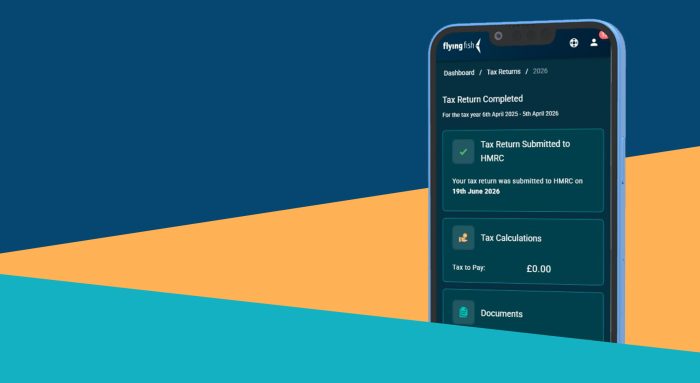
We actually have technology that handles the calculations, so it works out the qualifying days and the figures automatically rather than someone doing it by hand, which keeps it accurate and quick.
Once that’s done, I review the calculations myself before anything goes further, just to make sure everything looks right and nothing’s been missed.
Then you approve the figures, and once you’re happy, I submit the return to HMRC.
It’s a lot simpler from the client’s side than people expect, most of the work happens on our end.
What do you enjoy about helping seafarers?
I love telling people they have no tax to pay!
I also just love explaining tax properly and helping people actually understand what’s happening with their own tax situation.
A lot of seafarers have never really had to deal with UK tax before they started working at sea, so taking the time to explain it properly matters to me.
Is there a wrong time to contact you?
I actually keep every afternoon available to chat to new and existing customers. However, January is the exception, that’s really only for emergencies. That’s because the tax year ends on the 31st of January, and a lot of people leave it right to the last minute to get their return in.
So January turns into a bit of a crunch period for us, trying to get everyone’s return submitted before the deadline. I’ll try my hardest to get things submitted on time, but it does mean my availability for general chats and new enquiries is much more limited that month.
What’s the average tax liability a seafarer can save?
It depends entirely on someone’s income, so it’s hard to give one number that fits everyone.
But I’d say on average we save people around £6,000.
It varies a lot, someone earlier in their career on a lower salary will save less in absolute terms than a senior crew member on a much higher one, even though the principle is the same.
For example, I recently saved someone a £30,000 tax bill just by advising them on how to structure their travel dates, which shows how much difference proper planning can make, it’s not just about filling in a form correctly, it’s about the advice that goes with it.
What advice would you give someone claiming SED for the first time?
Don’t overthink it.
Talk to a specialist, and trust them to do the work properly. People sometimes come to us having spent weeks worrying about spreadsheets and working out their own days at sea, and honestly, that’s what we’re here for.
Send us your information, let us handle the calculations, and ask questions along the way if anything’s unclear. It really doesn’t need to be as stressful as people make it.