

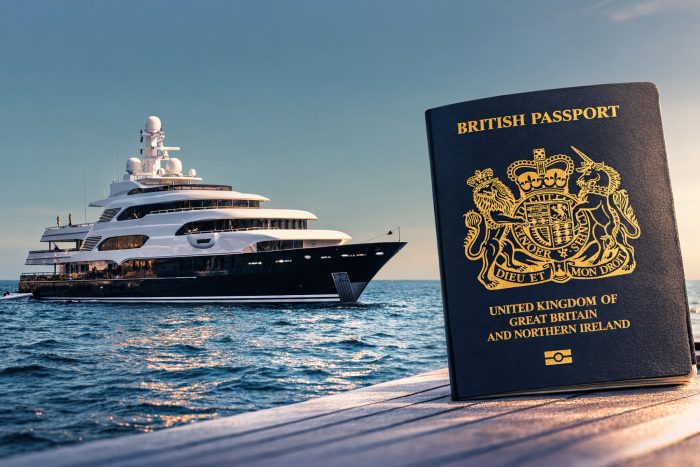
A change to UK border rules came into force on 25 February 2026. If you are a dual national and hold two passports, please read on.
What has changed?
Up until 25 February 2026, British dual nationals, people who hold a UK passport alongside the passport of another country, were able to travel back into the UK using either passport. If your Australian, French, or American passport was more convenient, perhaps because it had longer validity or you simply had it to hand, you could use it without any problem.
That is no longer the case.
From 25 February 2026, if you are a British citizen, you must enter the United Kingdom using either a valid British passport, a valid Irish passport, or a foreign passport that contains a digital Certificate of Entitlement confirming your right of abode in the UK.
Turning up at the airport with only your non-British passport, even if you are a British citizen, could mean you are refused boarding before you even get on the plane.
Put very simply – If you are a British citizen, always travel with your British passport and make sure it has not expired.
Why has this happened?
The UK now requires most visitors to get an Electronic Travel Authorisation (ETA) before they travel. Think of it as a digital entry pass that visitors apply for online before they board their flight.
British citizens do not need an ETA. But here is where it gets tricky for dual nationals.
When you check in for a UK-bound flight, the airline’s system checks your passport and looks for either a British passport or a valid ETA. If you hand over a French passport, for example, the system treats you as a French visitor and looks for an ETA. You do not have one, because you are British and never needed to apply. The system does not know that.
You get refused boarding.
Your right to enter the UK has not changed.
The only thing that has changed is that you now need your British passport with you to prove it.
What does this mean for yacht crew and seafarers?
If you work on a superyacht or cruise ship, your life involves a lot of travel. You could be flying home from the Caribbean, the Med, or Southeast Asia, often at short notice, sometimes after a long season where passport admin was not top of mind.
Here is why this change matters specifically for crew.
You travel constantly. Unlike someone who flies home from the same city once a year, crew members move between multiple countries, multiple times a year. Every journey back to the UK is now a potential problem if you are not carrying a valid British passport.
You may have let your British passport expire. If you have been travelling primarily on an EU or Australian passport for convenience, your British passport may have lapsed without you noticing. It happens. You tend to renew the one you use most often.
Renewing your passport from abroad takes time. If you are currently on a yacht in the Maldives or working a season in the Bahamas and your British passport has expired, you cannot simply fix it that afternoon.
Overseas passport renewals are processed in the UK and typically take between three and six weeks, sometimes longer during busy periods. You also have to send your old passport to the UK as part of the application, which means you cannot travel internationally until the new one arrives.
There is no fast-track option from overseas. The UK’s fast-track passport service is only available if you are physically in the UK. From abroad, your options are the standard process or, in a genuine emergency, an Emergency Travel Document, which is limited to specific journeys and is not a long-term solution.
Who is affected?
The change affects British dual nationals whose second nationality is from a country that does not require a UK visa. This includes people with dual British and Australian, British and American, and British and EU citizenship, such as French, German, Spanish, or Italian, among many others.
If you hold both British and Irish citizenship, you are not affected.
Irish passport holders can continue to enter the UK without restriction as part of the Common Travel Area arrangement.
If your other nationality is from a country that already requires a UK visa, the rules for you have not changed in practice.
According to the 2021 census, more than 1.2 million people in England and Wales alone hold dual nationality. That is a significant number of people, including many who work at sea and may not have been following UK government announcements closely.
What are your options?
The first thing to do is check whether your British passport is still in date.
If it is valid, you do not need to do anything except make sure you travel with it.
If it has expired, or is close to expiry, here are your options.
Option 1: Renew your British passport (the simplest solution)
Renewing is the easiest and most permanent fix. A standard UK adult passport costs around £100 if you are renewing from within the UK. From abroad, fees are higher, around £264 if your previous passport was issued after January 2004, and the process takes longer.
Allow three to six weeks including courier time, and up to ten weeks during busy periods.
One important thing to plan for: you have to send your existing passport as part of the application, which means you cannot travel internationally until the new one arrives. Do not start the renewal process the week before you need to travel.
Apply via the UK government’s official website: www.gov.uk/renew-adult-passport
Option 2: Apply for a Certificate of Entitlement
If you do not want to apply for a British passport, you can apply for a digital Certificate of Entitlement (CoE) instead. This confirms your right of abode in the UK and is linked to your non-British passport. The downside is the cost. A Certificate of Entitlement currently costs £589, so for most people renewing a British passport makes more sense.
Option 3: The expired passport workaround (temporary and not guaranteed)
The Home Office has issued temporary guidance saying that airlines and ferry companies may accept an expired British passport alongside a valid foreign passport, provided the details on both documents match. This is at the carrier’s discretion and is not a guaranteed right to travel. It is not something to rely on as a long-term plan.
Is there more change coming?
Yes. While you are sorting out your UK travel situation, it is worth knowing that the EU is also introducing its own digital pre-travel authorisation system, the European Travel Information and Authorisation System (ETIAS). This is expected to come into force in late 2026 and will affect British citizens travelling to Europe.
For yacht crew working in the Mediterranean, this could add another layer of admin to keep on top of. We will write more on this as the details are confirmed.
The bottom line
If you are a British dual national and you are currently working at sea, check your British passport. If it has expired, or if it is going to expire in the next six months, start the renewal process as soon as you can.
The worst situation to be in is arriving at the airport at the end of a season, realising your British passport ran out two years ago, and facing a wait of several weeks with no way to travel internationally in the meantime.
It takes ten minutes to check. It could save you from a very difficult situation.
Useful links
Renew your UK passport: www.gov.uk/renew-adult-passport
Apply for a Certificate of Entitlement: www.gov.uk/right-of-abode/apply-for-a-certificate-of-entitlement
UK ETA information: www.gov.uk/guidance/apply-for-an-electronic-travel-authorisation-eta
Check if you are a British national: www.gov.uk/british-nationality