
Standing in Nice arrivals at 18 years old, with everything you own in one bag and a six-month plan that starts tomorrow, is not a small thing. You don’t know anyone. You don’t speak the language. The yachts you’ve seen on Instagram are about to be real, and you’ve got to walk up to the crew on board and ask them for work.
The nerves are normal. Every working Stewardess and Deckhand felt the same on day one. What separates the crew who go home from the crew who are still there in October isn’t talent or qualifications. It is whether they lock in.
Matt, one of our Deckhand Instructors, recently went back to Antibes to walk the docks himself and write up what he found. Here is what he learned, sharpened by everything our working crew know about doing it for real. The first weekend is for getting your feet under you. From Monday morning, the holiday is over.
Your first five days in Antibes (quick overview)
Top tips for your first week:
- Fly in on a Friday or Saturday. Nobody hires on a weekend, so the pressure is off until Monday.
- Take an Uber from the airport. The trains are easy once you’re settled, but the airport journey is overwhelming when you’ve just landed.
- Sign up to at least 10 yacht crew agencies before you fly. Complete every field on every profile.
- Use MarineTraffic to see where the yachts are to help plan your approach.
- Structure every weekday. Dockwalk in the morning, agencies and online searches in the afternoon, MarineTraffic in the evening.
- Don’t approach yachts that look dressed up with crew in formal uniform. That means guests are on board, and you’ll be remembered for the wrong reasons.
- If the money runs out, go home. There’s no shame in it, and it’s possible to find work online from the UK.
Your first five days at a glance:
- Days 1 and 2 (the weekend): Arrive. Uber to the accommodation. Walk around in normal clothes. Find the supermarket, the bars, the agency offices. Observe.
- Day 3 (Monday): Lock in. First structured day. Dockwalk in the morning, agency follow-ups in the afternoon, MarineTraffic in the evening.
- Day 4 (Tuesday): Same structure, harder. Knock on more doors than you did yesterday.
- Day 5 (Wednesday): Train to other ports. Antibes is not the only hunting ground.
The rest of this guide walks through it properly.
Before you fly
You shouldn’t even book a flight until your agency registrations are done.
Sign up to at least 10 yacht crew agencies before you go. The list we share with Flying Fish students runs to over 30 names, and even that’s not exhaustive. Complete every field on every website profile, upload your CV and your photo, tick every availability box. A profile that’s 70% complete is invisible to a recruiter searching for crew.
Then sort your paperwork. The crew who arrive with everything in order overtake the ones still chasing missing certificates from a French café in week two:
- Valid STCW Basic Safety Training certificate
- ENG1 medical
- Powerboat Level 2
- Originals of every certificate
- A polished CV with a recent professional headshot
- Spare passport photos for forms
If a flight is booked and any of the above is missing, push the flight.
Why Antibes?
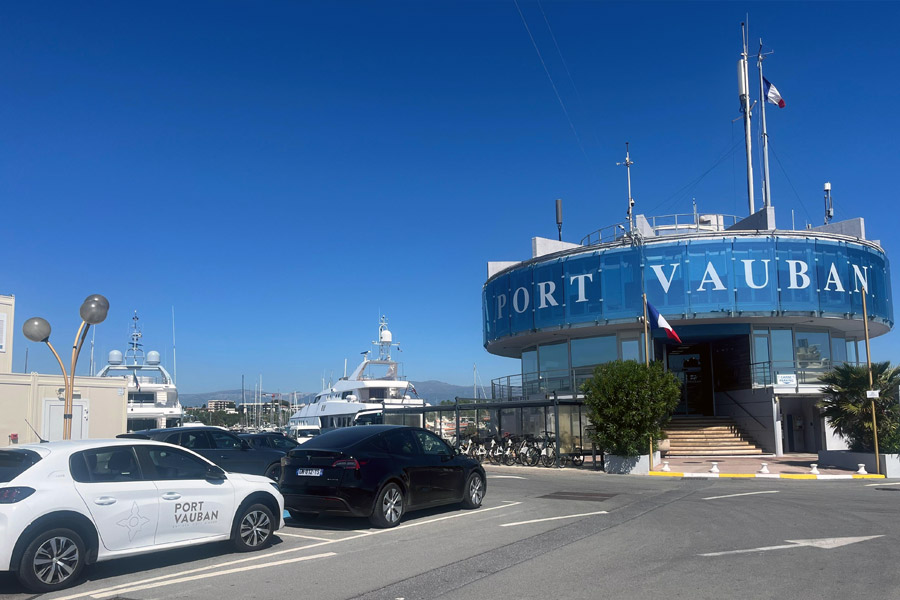
Port Vauban is the largest yachting marina in Europe and the unofficial home of green crew looking for their first job. Working yachts, crew agencies within walking distance, the bars where working crew actually drink, and a train line that runs the length of the Riviera. It is the most efficient base in the Med.
The competition is real. So is the opportunity. The crew who succeed treat the first week as a structured campaign. The crew who don’t make it treat it as a holiday with admin attached. You’ll spot both groups by the end of week one.
Getting there
From Nice airport, get an Uber. Take the train another day.
The airport isn’t actually in Nice itself, so the train route from arrivals means a tram to the nearest station, a change at Nice Ville, then a coastal service to Antibes, all with your luggage and the fog of a flight. Spend the money on the Uber, get to your accommodation in one go, and save the trains for when you’re rested.
The trains become your best friend from day three onwards. The line runs west to Cannes and east to Monaco and into Italy. A weekly SNCF pass works out cheaper than individual tickets once you’re moving between ports daily.
“You do not need to be able to speak French, just follow the app.”
That’s Matt on The Trainline app, which works in France the same way it does in the UK. Download it before you fly. For arrival day, the Uber app uses the same logic. Tap, pay, ride.
Accommodation
Two main options: crew house or Airbnb.
Crew houses are good for networking. You’ll be in group chats, on guest lists for agency events, and bumping into other green crew over breakfast. The downside is the price. They’re hostel-quality rooms at premium rates. Worth it if you’re flying out alone and want to land in a ready-made network.
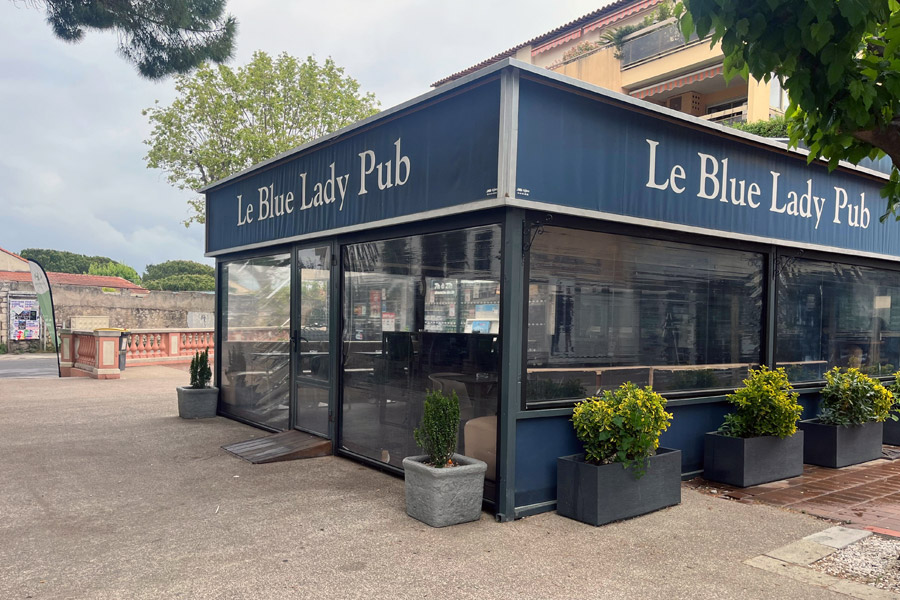
Airbnbs are usually cheaper, especially if you split one with two or three people from your Flying Fish course. You miss the in-house events, but agencies also run nights in places like The Blue Lady and the Facebook groups are easy to find. If you’re going this route, book somewhere east of the main road that runs alongside the railway line. It puts you closer to the marina, the agency offices, and the cheaper supermarkets, without paying old-town tourist rates.
Either way, the first thing to do once you’ve dropped your bag is to find:
- The train station, since you’ll be using it daily
- The agency offices you’ve registered with
- The supermarket, since a Carrefour five minutes inland from the port is noticeably cheaper than the ones beside it
- The Blue Lady, The Hop Store, and The Drinkers Club
You’re not networking yet. You’re just learning the map.
Days 1 and 2: the weekend
Don’t dockwalk yet.
This is genuinely the only part of the first week where the pace is allowed to be gentle, so use it properly. Nobody works on yachts at the weekend. Crews are off, captains are off, and walking up to a closed yacht to hand over a CV marks you out as someone who doesn’t know what they’re doing.
So be a tourist for two days. Walk the port in normal clothes with whichever Flying Fish coursemates have travelled out with you. Sit in the cafés. Go for a swim. See what crew look like when they’re off shift. Get over the disorientation of being in a new country alone.
In the evening, head out. The Blue Lady, The Hop Store, and The Drinkers Club are where Antibes yacht crew drink. You’ll meet Flying Fish students within minutes and working crew shortly after. Treat the social side as part of the job, not as the whole job. Conversations in these bars do produce day work invitations, but they produce them for the crew who are clearly serious. A small warning: The Blue Lady sits directly opposite Bluewater, one of the most respected agencies in town. Behave accordingly.
If you want to network beyond the bars, the running clubs and five-a-side football groups in Antibes are full of yachties. Search Facebook for the local groups before you fly, and you’ll be in a WhatsApp by the time you land. Conversations that start over a pint or a morning run produce more day work referrals than anyone admits.
Day 3: lock in
Monday morning. This is where the holiday ends.
Set an alarm for 6am. By 7 you should be down at the marina ready to start. The window from roughly 7 to 10 is when deck crews are out washing down, painting, doing morning maintenance. They are visible, they’re not yet inside, and they are the people you need to talk to.
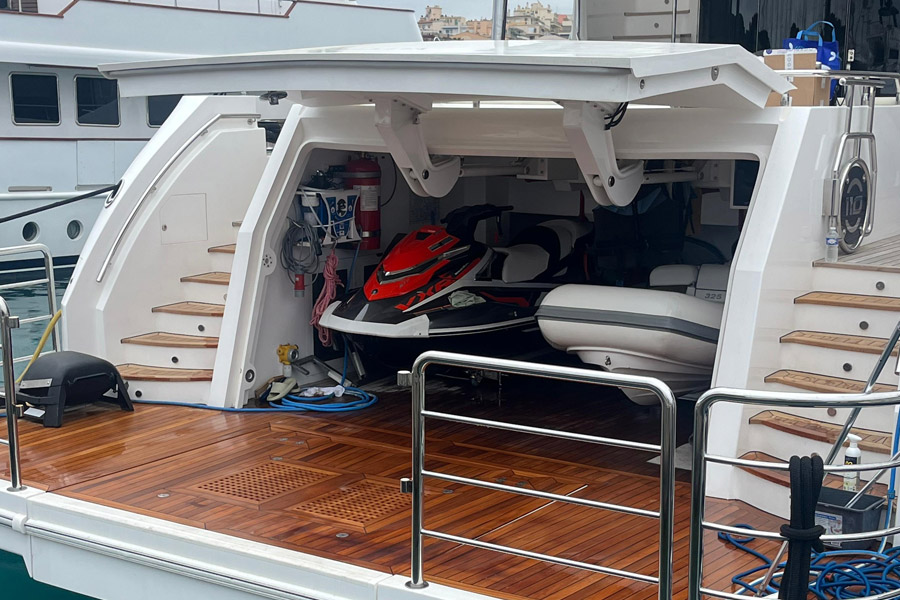
Don’t approach every yacht. Walk past the ones that look dressed up: fenders perfectly placed, crew in pressed uniforms, brightwork sparkling. That’s a tell that guests are on board, and approaching is the fastest way to be remembered as the green crew member who didn’t read the signs. Look for working boats. Boats mid-clean. Boats with deckhands visibly hosing salt off the teak.
When you find one, stop at the bottom of the gangway. Don’t step on. Eye contact, smile, and a clean opener: “Morning, are you taking on any day workers this week?” That’s it. No life story, no qualifications recital. If yes, hand over the CV and ask when to come back. If no (usually phrased as “we’re full” or “try us next week”), thank them, leave the CV anyway if it feels right, and move on.
“Start off small…give yourself the target of approaching 2 boats.”
Two boats. Get through them, and the fear cracks open. Then you keep going. The crew who get hired aren’t the ones who stop at two. They’re the ones who knock on the last door of the morning when everyone else has gone for coffee.
“You will quickly get over the fear of speaking to the crew.”
It does evaporate, usually by the third or fourth conversation. The crew on deck were standing where you are one or two seasons ago. They are not trying to embarrass you. Five rejections in a row stings less when you remember that the captain hiring you in two weeks might also reject your first five before saying yes.
A structured day, every day
Dockwalking is for the morning. The rest of the day still matters.
The working day breaks into three parts:
Morning (7-10am): dockwalk. The marina is where the day is won or lost. Wear smart, clean trainers, not boat shoes and not your travel shoes. Carry water, sun cream, your phone, a slim CV folder, and your originals if you’ve got a Seafarer’s office trip or an in-person agency meeting booked.
Afternoon: the inside work. Find a café (The Blue Lady doubles up as a daytime working spot), open the laptop, and apply for jobs online. Check in with every agency you registered with. Update your profiles. Reply to messages within the hour. If you had a meeting with an agent that morning, send a short thank-you email by the afternoon. Almost nobody does this, and the ones who do get remembered.
Evening: the planning. Open MarineTraffic. See which yachts have arrived in Antibes, Cannes, or the other ports you can reach by train tomorrow. Note the names. The green crew member who turns up at a yacht and casually mentions “I saw you came in from Palma last night” stands out from the ten before them.
Then sleep. Tomorrow starts at 6.
Day 4: keep going
Same structure as Day 3, harder.
“I did 34,000 steps in one day once walking around ports.”
Matt isn’t exaggerating. Buy proper trainers, hydrate, and resist the urge to drink your way through every evening. The crew who don’t make it are usually the ones who treat the bars as the main event and the dockwalking as something to do between hangovers. The crew who do make it are easy to spot by the end of week one: rested, focused, slightly quieter than the people who arrived with them.
If you’ve handed out 30 CVs and nothing has come back, that’s information. Look at what you’re doing. Are you approaching the right boats, at the right time, dressed the right way? Are your agencies hearing from you weekly? Are you on every Facebook group, in every WhatsApp? Adjust and go again.
Day 5: spread out
“As great as Antibes is… it is quite a small port.”
Travelling to other ports is a strategy, not a backup plan. Three things shift when you leave Antibes.
First, the competition thins out dramatically. Every green crew member is in Port Vauban. Far fewer make the effort to ride 20 minutes west to Cannes or east to Beaulieu-sur-Mer.
Second, the hiring cycles are different. Italian marinas often hire on a slightly later seasonal rhythm than France. Smaller French ports tend to have private yachts whose captains hire directly rather than through agencies. Monaco itself is several superyacht ports within walking distance of each other, and each has its own rhythm.
Third, your face becomes familiar across multiple ports rather than one. More chances for someone to remember you when a job opens.
The train line is the strategic asset here. Cannes is roughly 20 minutes west, Beaulieu-sur-Mer just past Nice, and Monaco about 45 minutes east. For Italy you’ll need to change trains at Ventimiglia, which is a working port in its own right and worth stopping at on the way through. Sanremo and Imperia are both reachable as day trips if you leave early.
Travel with someone if you can. Splitting fares helps and having company keeps you walking through the slower mornings.
Day 6 and beyond
If day work has come through by day six, you’ve done well. Treat every shift like a working interview, because that’s what it is.
If it hasn’t come through, you are not behind.
“Please do not worry if you haven’t found any day work yet.”
The Mediterranean season runs roughly April to October. Hiring fluctuates with charter bookings, refit schedules, and fleet movements. Some crew land work in 48 hours. Others take much longer. Neither tells you anything useful about your future in the industry.
What separates them is who keeps showing up after the first week stops feeling exciting.
Mistakes to avoid
Treating it as a holiday. The bars, the beach, the late nights. All of it will still be there in October. The crew who get hired don’t disappear for a long weekend in Marseille after a tough Tuesday.
Approaching yachts with guests on board. Dressed crew, pressed uniforms, fenders perfect. Walk past.
Skimping on agency registration. Ten is the floor, not the ceiling. Profiles 100% complete, not 70%.
Staying only in Antibes. The port is the hub, not the only hunting ground.
Forgetting the industry is small. The crew you chat to in The Hop Store on Tuesday might be the bosun interviewing you on Friday.
Skipping the follow-up email. A short thank-you to every agent you meet, sent the same day. Almost nobody does it.
What Matt would tell his day-one self
Start sooner. The first dockwalk in Antibes is the hardest one you’ll ever do. Putting it off makes it bigger in your head.
Be less hesitant. Captains hire on confidence, not perfection. “Morning, are you taking on any day workers this week?” is enough.
Travel earlier. Antibes is the headquarters, but the jobs are spread along the whole coast.
Before you arrive
The crew who hit the ground running in Antibes are the ones who show up qualified and prepared. A valid STCW Basic Safety Training certificate, an ENG1 medical, and a Powerboat Level 2 are the minimum captains expect to see on a green CV.
Crew who have completed the Superyacht Deckhand Course, Superyacht Stewardess Course, or our three-week Superyacht Deck and Stew Course find their feet faster.
Get the qualifications. Sign up to the agencies. Book the Friday flight.