
If you have been researching how to get into the maritime industry, you will have come across STCW training, and you may have seen courses being advertised both in-person and online.
That gap naturally raises a question: is it possible to do STCW online, and if so, is it actually accepted?
This guide explains how it all works, so you can make an informed decision from the start.
Terms explained
Before we get into the detail, here are a few terms you will come across throughout this article:
STCW – The international safety training certificate you need to work at sea commercially. It covers fire fighting, sea survival, first aid, and personal safety. Without it, you cannot legally work on a commercial vessel, including superyachts.
MCA – The Maritime and Coastguard Agency. This is the UK government body responsible for maritime safety. They set the rules for what counts as approved STCW training in the UK.
Flag state – Every commercial vessel is registered in a country. That country is called its “flag state.” The rules of the flag state determine what training certificates are accepted on board that vessel.
MCA-approved – Training that has been assessed and approved by the UK government as meeting the required standards for seafarer safety.
Can you do STCW online?
If you’re in the UK, maritime training is regulated by the Maritime and Coastguard Agency (MCA). Under MCA rules, you cannot complete the full STCW Basic Safety Training course online. The core practical modules must be completed in person.
However, we aren’t saying you cannot do STCW online, as some non-UK flag states, such as the Netherlands, Liberia and Panama, do approve online or blended STCW delivery, and those certificates are legitimate under the rules of that country.
Whether they are accepted when you apply for work depends on the flag state of the vessel and the expectations of the employer.
To understand why, it helps to look at what the course actually involves.
STCW Basic Safety Training is made up of five separate modules:
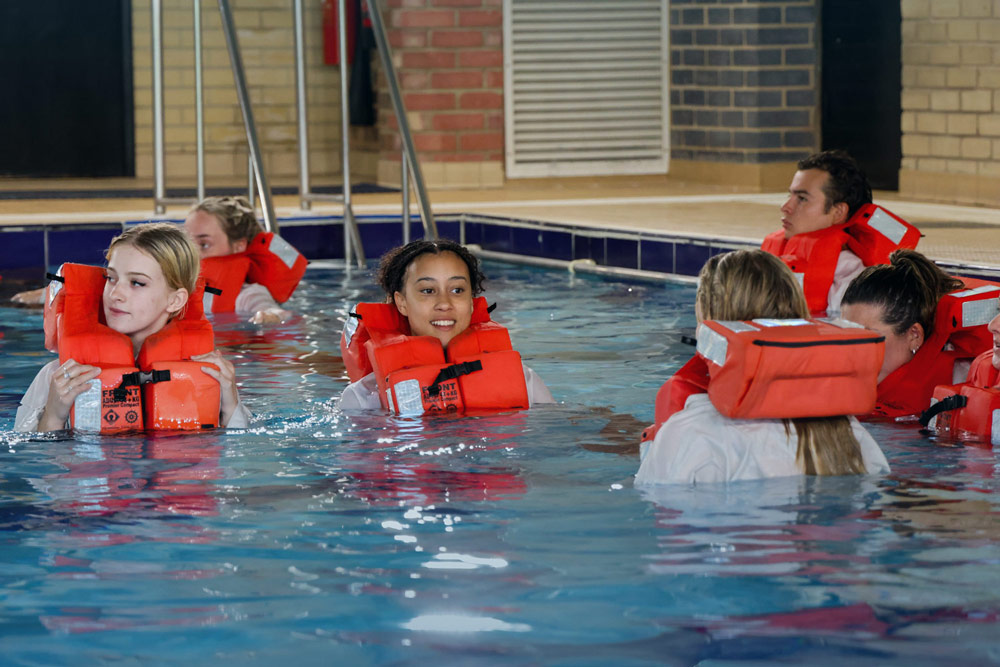
- Personal Survival Techniques (PST) – how to survive if a vessel sinks, including deploying and boarding life rafts
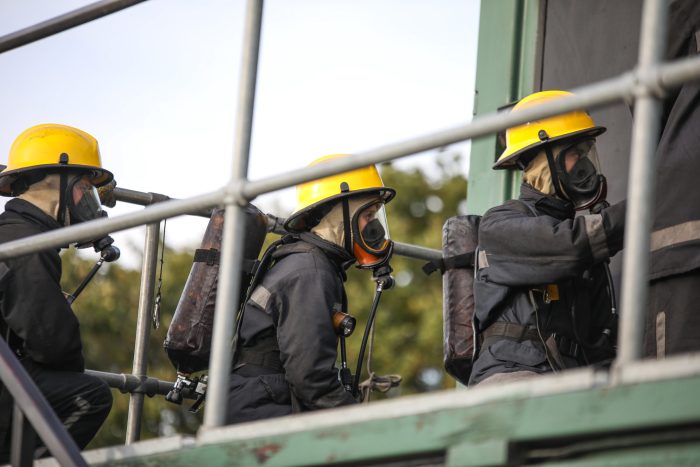
- Fire Prevention and Fire Fighting (FPFF) – how to prevent and combat fires on board using breathing apparatus and firefighting equipment
- Elementary First Aid (EFA) – how to provide immediate medical assistance on board
- Personal Safety and Social Responsibilities (PSSR) – safety culture, working at sea, and environmental responsibilities
- Proficiency in Security Awareness – how to identify and respond to potential security threats
Each module has different rules when it comes to online delivery.
The UK position: What the MCA allows
In the UK, the MCA sets the rules for what counts as approved STCW training.
Three of the five STCW Basic modules – Personal Survival Techniques, Fire Prevention and Fire Fighting, and Elementary First Aid – cannot be completed online under MCA approval.
The reason is simple: these modules involve hands-on practical exercises that cannot be replicated on a screen.
Practising how to jump from a vessel into open water, deploying a life raft, using a breathing apparatus in a simulated fire environment, or performing CPR are physical skills that require physical training.
Watching a video or completing an online module does not prepare you to perform them under pressure.
The one exception is PSSR – Personal Safety and Social Responsibilities.
This module focuses on safety culture, environmental awareness, and how to behave as a responsible crew member. Because it is less practically intensive, the MCA does allow it to be delivered online by approved providers.
The key takeaway: a complete STCW package delivered entirely online would not meet MCA approval requirements.
So is STCW online legit?
This depends on where the course comes from and where you plan to use it.
STCW is an international convention, but each country administers it differently through its own maritime authority. Some countries, including several used as flag states for yachts and commercial vessels, have approved online or blended delivery models for STCW training.
Panama and Liberia are examples of registries that have taken a different approach to online delivery.
Courses issued under these administrations are entirely legitimate under the rules of that particular country. They are not automatically fraudulent or fake.
For the UK specifically, the MCA does not approve practical STCW modules (PST, FPFF, EFA) delivered entirely online.
If you are based in the UK and applying for your first job through UK or European recruiters, MCA-approved training is generally considered the benchmark.
There are also two broader questions worth considering:
Will it be accepted where you want to work? A certificate issued under a different flag state’s authority may not meet the requirements of UK or European employers. Many Superyacht Captains and recruitment agencies specifically look for MCA-approved STCW training.
Will it support your long-term career? If you plan to progress and take further qualifications, working towards officer-level roles, or moving across flag states, MCA-approved training from the start gives you a widely recognised foundation.
What should UK candidates think about when comparing options?
It is completely understandable to compare costs when you are starting out. The price difference between an online course and an in-person one can feel significant, especially when you are not yet earning.
But it helps to think about the question slightly differently. The real question is not “what is the cheapest way to get a certificate?” It is “what training will actually be recognised when I apply for my first job?”
A certificate that is not accepted by the employers you are targeting is not a saving, it is a cost. Redoing your training after the fact is more expensive and more time-consuming than doing it right the first time.
MCA-approved practical STCW training also gives you something that online training cannot: genuine confidence in an emergency.
Knowing you have actually practised deploying a life raft, used a fire extinguisher correctly and performed CPR on a mannequin matters when something goes wrong on board.
Safety training is by its nature experiential. The value is in the doing.
If you decide to do STCW online
If you are adamant an online STCW course is for you, whether it’s for cost, convenience, or flexibility, there are a few things worth confirming before you pay.
Which maritime authority approves the course? Not all STCW certificates are issued under the same rules. Find out which country’s maritime authority has approved the course, and what that means for where the certificate will be accepted.
Will it be accepted where you want to work? Check the flag state of the vessels you are targeting, and ask whether that administration recognises the certificate you are planning to get. This is not always obvious from a course website.
Have you spoken to a recruiter first? A quick conversation with a maritime recruitment agency before booking can save you significant time and money. They will tell you what certificates they expect to see from candidates.
Have you seen an example of the course content? Before paying, ask to see how the course is delivered. This goes for all online courses, not just STCW. A poorly structured online course with weak content and visuals will make learning very difficult.
A note on the future of online maritime training
We know the training landscape is changing, and we think that is a good thing.
Technology has opened up real opportunities to make learning more accessible and there are parts of maritime training where online delivery genuinely works.
We also believe, from 18 years of delivering STCW, that some things are simply learned better in person. Watching a video of someone deploying a life raft is not the same as doing it yourself in cold water. Seeing a demonstration of a breathing apparatus is not the same as wearing one in a smoke-filled room. That physical experience, the slight nerves, the muscle memory, the confidence that comes from actually doing it, is what makes the training stick when it matters most.
Could we one day see hybrid MCA-approved STCW courses, where some elements are completed online and others in person? Possibly.
The conversation is happening across the industry and we would welcome a well-designed hybrid model if it maintained the quality of practical training.
But we are not there yet, and until we are, our view is straightforward: for the modules that matter most in an emergency, there is no substitute for getting hands-on.
Summary
- You can complete STCW fully online under some non-UK flag state administrations.
- You cannot complete a UK MCA-approved STCW Basic Safety Training Course online. The practical modules must be done in person.
For UK candidates planning to work in the Superyacht or Commercial Maritime industry, MCA-approved practical training is the recognised standard that employers expect.