

How to become a Superyacht Stewardess
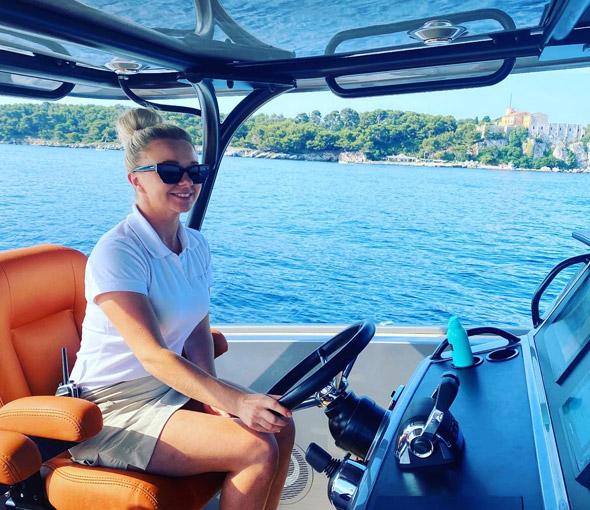
Your path to Steward or Stewardess role on a Superyacht
If you want to become a Yacht Stewardess, this guide shows you exactly how to get your first job, from deciding if the role is right for you, to getting qualified, building your CV and finding work in the Mediterranean.
One thing worth knowing before you start: in the industry, Stewardesses are universally known as “stews.” You’ll hear it everywhere from the docks in Antibes to the crew houses in Palma. Now you know.
These first two steps are where you are now, you are discovering whether working as a Stewardess on a yacht is right for you, so let’ s begin there.
If you don’t want to read the whole article, here is what you need to do:
- Decide if the job/lifestyle is right for you
- Get your ENG1 medical
- Complete your core training (STCW + Stewardess Skills)
- Build a strong yachting CV
- Go to Antibes or Palma and start applying
- Network, dock walk and stay visible
1. Is being a Superyacht Stewardess right for me?
If you pursue a career in yachting, you will spend your time in some of the most beautiful places in the world, make great money quickly and meet people you’ll know for the rest of your life.
But yachting isn’t for everyone, and the people who struggle are usually the ones who weren’t honest with themselves before they started. So let’s get the harsh realities out of the way first.
The work is hard and the hours are long. You will be told what to do, a lot, especially in your first season. You need to be headstrong enough to handle that without it breaking you, and humble enough to get on with it without it becoming an issue.
Living and working in close quarters with the same small group of people means that when conflict arrives, and it will, there is no escape from it. You can’t go home at the end of the day. You have to be genuinely good at managing relationships, knowing when to speak up and when to let things go.
You won’t see your close friends and family for long stretches at a time. You have to be really ok with that.
The people who thrive in yachting tend to share a few qualities. They’re resilient enough to absorb a tough day and show up the next morning with a good attitude. They adapt quickly, because every yacht runs differently, every Chief Stew has different standards, and every guest has different expectations. They’re discreet, because you will be in close proximity to very private people. They’re comfortable being far from home for months at a time. And they take genuine pride in doing things properly, not just getting them done.
If you’re reading this and nodding rather than wincing, this could be the right industry for you! Read on.
2. What does a Stewardess do?
If those traits sound like you, here’s what your day-to-day life will actually look like.
The interior department is the heartbeat of a superyacht. While the Deckhand team keeps the vessel running, it’s the Stewardess team that creates the experience, the reason guests come back season after season and why owners trust their yacht to a particular crew.
It’s a role that sits somewhere between five-star hotel hospitality and private household service, but at sea, with no days off when guests are onboard, and with the added complexity of living in the same space as the people you work with. The standard expected is exceptionally high, and the best stewardesses make it look effortless.
At its core the role is about one thing: making sure every person onboard feels looked after, at all times, without ever having to ask twice.
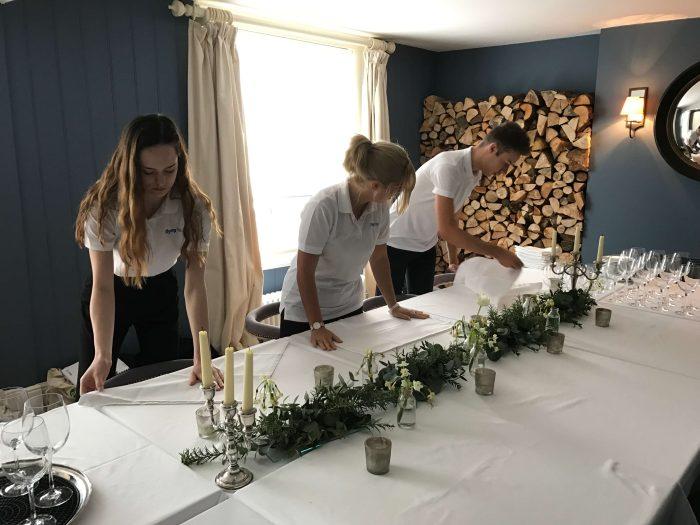
Working under the Chief Stewardess, your duties will typically include cabin preparation and turndown, laundry and garment care, table setting, floral arrangements, food and beverage service, preparing beach getaways, and packing and unpacking guest luggage.
On some yachts you’ll also assist the deck team with mooring.
On larger yachts, the interior team is split across three specialist areas, housekeeping, laundry, and service, with dedicated crew for each. On a smaller vessel (35–40m), you may cover all three yourself.
Hours and life onboard
When there are no guests, expect a fairly structured working week, typically 08:00 to 17:00, five or six days, with time to explore wherever the yacht is berthed. All meals are provided, your uniform is supplied and the yacht is your home.
When owners or charter guests arrive, that changes. There is no fixed finish time. Twelve to fourteen hour days are normal, and it’s not unheard of to work several weeks without a day off during a busy season. The guests come first, always.
3. What qualifications do you need to become a Yacht Stewardess?
If you’ve read this far and you’re thinking ‘this could be for me’, the next step is getting the right qualifications.
Some are mandatory, some will strengthen your CV.
The two you must have:
ENG1 Medical Certificate – This is a seafarer’s medical confirming you are fit to work at sea. Get this first, before anything else.
STCW Basic Safety Training – compulsory for anyone working on a commercial vessel. You’ll cover sea survival, first aid, firefighting, and health and safety. It’s a week of your life and non-negotiable. See our STCW course.
Additional qualifications that will strengthen your application:
- CIEH Food Safety Level 2 (note: the online version is not accepted on yachts, you must complete this in person)
- MCA Proficiency in Designated Security Duties (PDSD)
- RYA Powerboat Level 2
- RYA Personal Watercraft Course (PWC)
- RYA VHF Radio
- Barista training, wine appreciation and mixology
How much training do you actually need?
That depends on your background, which we’ll cover next.
4: Have the experience and skills to get your foot in the door
Qualifications get you compliant whereas experience and skills get you hired.
Captains, Chief Stewardesses and recruiters see a lot of CVs from people who have ticked the qualification boxes. What makes you stand out is what you can actually do and a lot of that comes from life before yachting.
Hospitality is the most valued background for Stewardesses in the industry. If you’ve worked in any high end hotel, restaurant, or private household you already understand standards, long hours and putting the guest first. On a Superyacht, that’s everything.
But it doesn’t have to be hospitality. The qualities that make an exceptional stewardess show up across a wide range of careers:
Nannies and childcare workers – patient, discreet, brilliant at anticipating needs
Beauty therapists and hairdressers – personal, detail-oriented, comfortable in close proximity to clients
Massage therapists – an increasingly valued add-on skill onboard, especially on larger charter yachts
Air cabin crew – service standards, safety awareness, and the ability to stay composed under pressure
Private household staff – housekeeping, silver service, discretion at the highest level
We spoke to Olivia Court, Interior Recruitment Consultant at Wilson Halligan, about what makes a green stew stand out in a competitive market.
“Having a background in hospitality… barista work, mixology, housekeeping… can significantly improve your chances. An added specialist skill, whether yoga, spa or floristry, can help you stand out further. I’ve recently placed a green steward with mixology experience on land, as well as two green spa stews, all of whom were originally being considered for roles requiring two or more years’ experience.”
Where does that leave you?
If you have several years of experience in high-end hospitality or housekeeping, a five-star hotel, a private household, or similar, your experience will speak for itself. Complete your STCW and ENG1 and you’ll have what you need to start applying.
If you’re newer to that world, a stewardess course bridges the gap. It gives you the practical skills, the confidence, and something concrete on your CV. When a Captain sees Flying Fish on your application, they know the standard to expect from you on day one and that familiarity carries real weight.
You’ll see the IAMI GUEST programme mentioned across the industry. It’s a legitimate framework, but it isn’t a requirement and it won’t guarantee you a job. What a Captain cares about is whether you can perform on day one – and that comes from the quality of your training and the experience you bring, not a badge.
Our Superyacht Stewardess Course covers all mandatory qualifications plus the additional skills that make your CV stand out, and we’ll help you build that CV too.
5. Write a great Superyacht Stewardess CV
Your CV is a sales pamphlet, not an essay. A Captain or Chief Stewardess will form an opinion in a matter of seconds, so it needs to be engaging, honest, and to the point.
A yachting CV is different from anything you’ve written for a land-based job. You’ll include a photo, your date of birth, and character references, things that would be considered discriminatory in a standard job application but are standard practice in the industry. Get the format right and it immediately signals that you know how yachting works.
The seven things your stewardess CV needs:
Personal information
A professional photo – Passport-sized, head and shoulders, no selfies or filters. Tie your hair back, minimal makeup and jewellery, and ask someone else to take it.
A short personal profile – Who you are and why you want to work on superyachts. Keep it genuine, Chief Stews can spot a generic profile immediately.
Qualifications – Lead with STCW, ENG1, and PDSD, then list additional skills. If you have beauty, massage, or hospitality qualifications, include them here.
Work experience – Chronological, most recent first. Two or three sentences per role focusing on skills and standards, not just job titles.
Hobbies and interests – Arguably the most important section. Yacht crew are outgoing people who like sport, travel and adventure. This is where your character comes through.
Two references – Not family members, professional references only. Name, telephone, and email. Many agents require a written reference as part of their process.
We’ll help you get it right
During your Superyacht Stewardess Course with us, we’ll work one-to-one with you to make sure your CV is ready before you start applying, because a great CV is the difference between getting the call and not.
6. Go to where the work is and find your first job
You’ve got your qualifications, your experience is on the page, and your CV is ready. Now comes the part that separates the people who make it into yachting from the people who don’t, which is actually going and getting the job.
The Superyacht industry runs on connections, presence, and timing and the people who find work quickly are the ones who put themselves in the right place and make themselves impossible to ignore.
There are three ways Stewardesses find their first job:
- Most crew travel to Antibes, France described as the hub of yachting in the Mediterranean.
- Online, we talk a bit more about “going online” below.
- Contacts. If you know somebody that is already working on a Superyacht then through their connections it is possible to find work.
Almost everybody that is looking for a job on a Superyacht travels to Antibes, France. On arrival, crew tend to stay in a crew house such as the Crew Grapevine used as a base to look for work.
If budget is a concern then crew join forces and rent an Airbnb between them. The advantage of a crew house like the Crew Grapevine is that the owners (ex-yachties) actively help you find a job.
The way you find a job on a Superyacht is quite unique. From your base in Antibes, you would travel to other ports in the local area, walk the dock and chat to the crew working onboard to see if there are any positions available.
Superyacht crew who have the evening off will go to the local bars to unwind. This is the perfect chance to get to know people that are working on Superyachts and to build connections in the industry.
Go online to look for work
All Superyacht recruitment agents post positions on their respective websites. Once qualified, new crew would register with the agency and complete their registration form. You would then get in touch with the agent to start searching for that dream job.
The recruitment agent’s job is to match the right candidate for the job being advertised.
There are many recruitment agents out there, a quick Google search for “Superyacht Recruitment Agents” will bring up a list.
Facebook is another medium that yachts use to post jobs. To keep up to date is it worth joining a couple of the Superyacht Facebook groups. Yacht crew jobs and Palma yacht group are two examples.
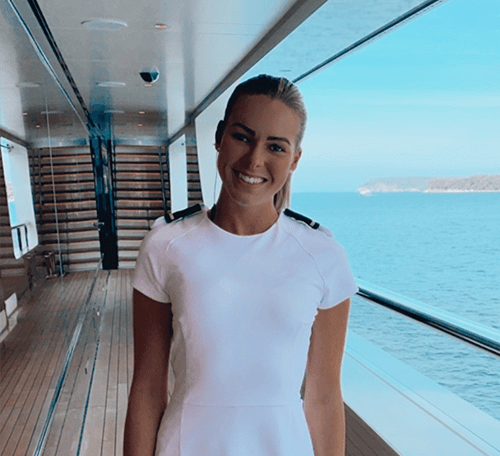
Amelia, who trained with Flying Fish, gave some good advice:
“Sign up to a few good recruitment companies, make sure you interview with the recruiter first rather than using Facebook. Second, when you have your interview, make sure you ask questions about the yacht. This is because you are not only finding a job but a home and family too, so ask as many questions as possible to make sure it’s the right yacht for you.”
Becoming a Superyacht Stewardess FAQ’s
Here are some of the most common we get asked about staring work in the Superyacht industry.
How long does it take to find work as a Stewardess on a Superyacht?
Over the 12 years that we have been running Steward and Stewardess courses, most find a job between one to four weeks. We have had customers that have found a job in a day and others that have taken six weeks to find that perfect job.
The time it takes to find a job is down to you. You will need to be proactive, up early, and make sure you are at the front of the queue. From our experience, people who work hard and explore every opportunity will find a job quickly.
When’s the best time to look Stewardess Superyacht work?
Traditionally Superyachts recruit for the Mediterranean season anytime between February to May. That being said, yachts recruit all year round. We have seen many graduates find work in July and August when the season is in full swing.
The next key recruitment period is between September and November as yachts prepare for the Caribbean season. Yachts will cross the Atlantic anytime between December and January to cruise the Caribbean or the US for the winter.
Superyacht crew who have had a busy Mediterranean season may decide to take the winter off, which leaves opportunities for new crew to enter the industry.
How much money does a Stewardess typically make?
A Steward/ess starting out in the industry can expect to earn €2,000 to €3,500 per month – almost all crew paid in Euros. The salary can depend on many factors, the main one being the yacht’s “crew budget.”
The owner or management company will agree on a budget that the Captain uses to hire crew, which can lead to small variations in the amount yachts pay their crew.
Your salary can also depend on whether you work on a Charter or Private yacht. It is customary for charter guests to tip the crew, the tip is normally around 10% of the charter fee. Chartering a Superyacht can set you back anywhere from €250,000 to €1 million per week.
Tips are split evenly amongst the crew and on average, can be anything from €2,000 – €5,000 per charter.
View all superyacht crew salaries >
Is my salary tax-free?
As a crew member (or Seafarer) working on a Superyacht, it is likely that you will be out of the UK for a significant about of time. Spend more than half of the year abroad then you fall under a specific piece of legislation called the Seafarers Earning Deduction Scheme. As a basic principle, if you are out of the UK for more than 183 days then there is no income tax on income (including tips) from the yacht.
UK Seafarers are required to complete a self assessment tax return each year. Flying Fish are registered tax agents and offer a Seafarers tax service to the yachting industry. We work with hundreds of customers to insure that their Self Assessment tax returns are completed on time.
What are the cabin arrangements ?
You will share a cabin with another Stewardess. The cabins are small but comfortable with an ensuite bathroom. There is access to the internet via that yacht’s Wi-Fi system, so you’ll be able to keep in touch with friends and family at home.
Can I make a career in yachting?
Yes, and many have! Becoming a Superyacht Stewardess can be a career, and what an amazing career it can be. Every Stewardess starts out as a Junior Stew; then, as you gain time and experience onboard you can progress to 2nd Stew, then Chief Stew.
The Chief Stew runs the entire interior team, manages the budget, and will be the first point of contact for the guests and owners – not an easy role!
Some yachts will employ a Purser, which can be best described as the PA to the Superyacht.
Not only is there progression, but becoming a Superyacht Stewardess offers the travel and adventure we all seek. You will meet some of the world’s rich and famous and make some friends for life.
How do I get a job on a yacht with no experience?
It’s true that you don’t have to have worked on a yacht to start your career as a Steward/ess (apart from the compulsory qualifications mentioned above!).
The more experience you can offer the yacht, the better. To understand the experience and qualifications you need to get started, you can either contact us or download our guide.
We’ve simplified the journey, breaking down the key steps to help you land your first job in this incredible industry. Your future starts now, let’s make it happen!

Want to find out more?
Contact our team at Flying Fish today for information on our Superyacht Steward/ess course, life as a Stewardess, qualification advice and much more!
Alternatively, click on our Superyacht Steward/ess course below and kick start your new career today!
Superyacht Stewardess Course
Start your career as a Steward or Stewardess with confidence, this course includes everything you need, including STCW.
15 day(s)
£3,340
Superyacht Interior Course
Already have your STCW? This course is perfect for gaining knowledge and hands-on training for a Steward or Stewardess role on Superyachts.
5 day(s)
£1,770
Superyacht Deckhand and Steward/ess Course
This course provides the training, skills, and qualifications you need to confidently apply for combined roles on board.
22 day(s)
£4,750