
From the outside, the Chief Stewardess role looks polished and effortless.
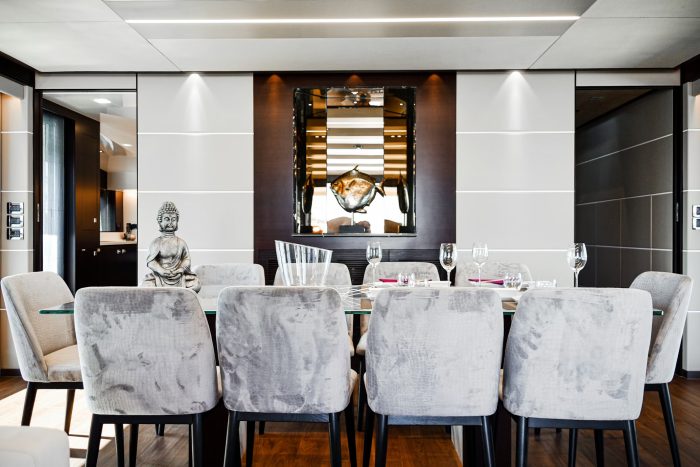
Champagne service, pristine cabins, an impeccably turned-out team moving quietly through a stunning Superyacht.
From the inside, it’s something else entirely: high-stakes operational leadership, constant decision-making and a mental load that rarely switches off.
If you’re working your way up through the interior, or aspiring to work on Superyachts and the Chief Stewardess role is your goal, this guide is worth reading carefully.
We spoke to experienced Stewardesses who have worked closely alongside Chief Stewardesses across multiple yachts and seasons.
What they shared paints a picture that is aspirational yet very honest.
At a glance: the Chief Stewardess role
The role: The most senior interior position on a Superyacht. The Chief Stewardess owns everything guest-facing, manages the full interior team, and is accountable for standards across service, housekeeping, and laundry. They report directly to the Captain.
Experience needed: A minimum of five years in the industry is realistic, including at least three years at second stewardess level. The role cannot be fast-tracked.
Personality traits that suit the role: Calm under pressure, highly organised, an exceptional people-reader, comfortable with conflict and genuinely career-driven. Someone who wants responsibility, not just a senior job title.
Who this role is not for: Anyone who struggles with pressure, dislikes or cannot manage people and is conflict-averse will find the Chief Stewardess role very difficult. Disorganisation at this level affects the whole team.
Salary: €4,000 to €8,000 or more per month, depending on yacht size and experience.
What is a Chief Stewardess responsible for?
The Chief Stewardess takes full responsibility for the running of the interior, covering everything to do with guests and crew.
That means the guest experience from arrival to departure, the management of all stewardesses on board, and the standards maintained across service, housekeeping, and laundry.
It also means a significant amount of admin. Ordering, provisioning, planning: a surprising amount of time is spent behind a computer, not on the floor.
The Chief Stewardess is the main point of liaison with guests, which means they carry more guest interaction than anyone else on the crew.
When something goes wrong, the Chief Stewardess is the first call. Not because they caused the problem, but because fixing it is their responsibility.
Who do they report to, and who reports to them?
The Chief Stewardess reports directly to the Captain.
All Stewardesses on board report to the Chief Stewardess.
The division of authority is straightforward: safety belongs to the Captain, the interior belongs to the Chief Stewardess. Within that interior world, their word is final.
Chief Stewardess vs Second Stewardess
The distinction between Chief and Second Stewardess isn’t simply about seniority, it’s about accountability.
The Chief Stewardess leads service directly and carries the most guest interaction of anyone in the interior team.
The Second Stewardess supports operations and keeps the other departments running smoothly. It’s a meaningful difference. The Second can execute brilliantly; the Chief Stew owns the outcome regardless.
The Chief Stewardess has the final say on how the interior runs.
That includes how the team is deployed, how guests are managed, and how problems are resolved. The Second Stewardess does not carry that weight, and until you’ve experienced it first-hand, it’s easy to underestimate how different that feels.
In terms of qualifications, the Chief Stewardesses only need to hold a held food hygiene certification and STCW Basic Safety Training. But experience matters far more than any certificate.
You cannot qualify your way into this role.
The reality of the role
There’s a version of the Chief Stewardess role that exists in people’s imaginations: perfectly presented, gliding through gleaming interiors, orchestrating flawless service. That version is real, but it’s the surface.
Underneath it is a role that is always on. Chief Stewardesses don’t necessarily work longer hours than the rest of the team, but they are always on call.
The job is constantly running in the back of their mind, even off-watch, even at anchor, even during a quiet passage. That mental load is one of the things that surprises people most when they step into the role for the first time.
The admin is another. Ordering, provisioning, scheduling, paperwork: a significant portion of the role happens behind a screen, not in front of guests. Anyone expecting pure service work will find the reality quite different.
What happens when things go wrong?
This is where the Chief Stewardess earns their position.
A blackout alarm goes off in the middle of the night. Guests are woken, plunged into darkness, disoriented and frightened. The Chief Stewardess is the first point of contact, managing angry, scared people in real time, with no preparation and no script.
Drunk guests. Last-minute itinerary changes. Twenty additional guests arriving with ten minutes’ warning. These are not hypothetical scenarios, they are the realities of yachting, and the Chief Stewardess is expected to absorb them without losing composure.
The best Chief Stewardesses, in our sources’ experience, were unshakable. Fast to react, fast to delegate, and always aware of where each person’s strengths lay. A hard outer shell isn’t optional in this role, it’s essential.
What you won’t see a great Chief Stewardess do is raise their voice.
That, more than anything, was cited as the clearest sign that someone had stepped up before they were ready.
What makes a good, or bad, Chief Stewardess
A good Chief Stewardess delegates well and sets the tone for the day. When the Chief Stew is composed, the team is composed. When they are off, the whole interior feels it. The team either backs off or braces for a difficult shift. The mood of the interior department starts and ends with the Chief Stewardess.
The best ones read people exceptionally well. They understand the strengths and limitations of their team, the mood of their guests, and the expectations of the Captain, often without a word being said.
A Chief Stewardess who struggles tends to share similar traits: disorganised, uncomfortable with conflict, easily flustered under pressure.
Poor delegation is perhaps the most common failure. When the Chief tries to carry everything themselves, the team loses clarity on where they stand and what’s expected of them.
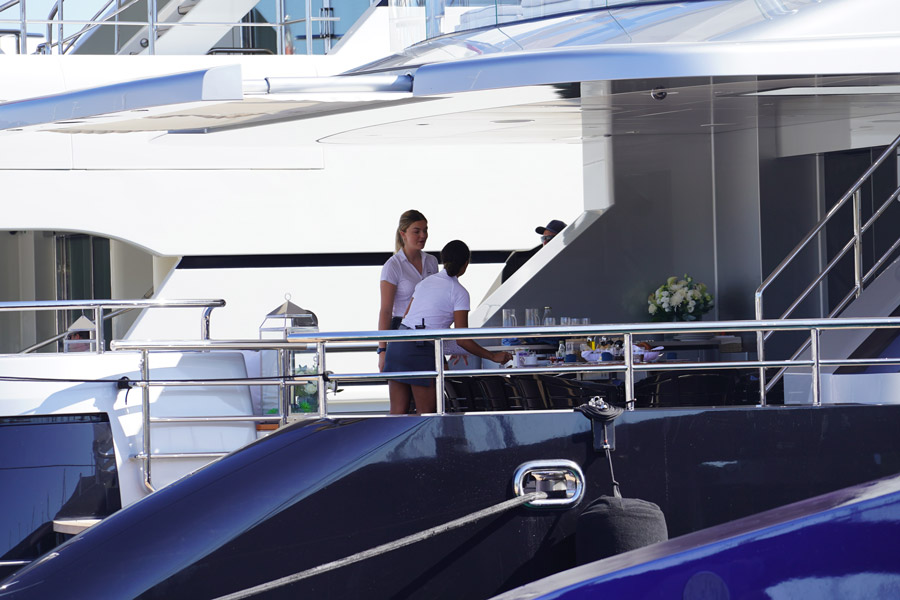
Is it hands-on or managerial?
Both, and that balance never fully resolves. The Chief Stewardess never stops being hands-on: standards are set by example, and guests notice when the Chief steps back entirely. But as the role grows, particularly on larger yachts, the managerial weight increases significantly.
More team to lead, more logistics to manage, more decisions to make.
Anyone expecting to step into the role and stay primarily on the floor will find the reality pulls them away from it more than they anticipated.
How long does it take to become a Chief Stewardess?
Five years is a realistic minimum. It can happen faster on a smaller yacht. On boats under 30 metres, the interior team may be just two people, which means opportunities to step up come sooner.
On anything over 30 metres, a Chief Stewardess is standard, and the competition for those roles reflects the experience required.
The advice from our sources on fast-tracking was unambiguous: you can’t. Without the experience, you won’t be good at the role, and you will burn out.
A good three years at Second Stewardess level, really understanding the pressure from the inside, is what separates someone who is ready from someone who thinks they are.
It’s worth noting that you don’t have to work your way up on the same yacht.
You can join a new boat directly as Chief Stewardess, and there will typically be a handover document covering everything you need to know about that particular yacht. But the years of experience behind you need to be real, regardless of which boat you built them on.
Salary and longevity
Chief Stewardess salary ranges from around €4,000 to €8,000 or more per month, depending on the size of the yacht and level of experience. It is a meaningful step up from second stewardess level, though our sources noted that the jump in responsibility tends to feel larger than the jump in pay, at least initially.
In terms of career longevity, Chief Stewardesses tend to go one of two ways. Some find the sustained pressure too much and step back after a season.
Others stay in the role for years, sometimes decades. Chief Stewardesses in their fifties are not uncommon, and some of the most respected in the industry have been doing it for the better part of their careers.
The role is open to both men and women.
Male Chief Stewards bring their own strengths to the position and are well regarded across the industry.
Is this the right career goal for you?
The Chief Stewardess role is for someone who genuinely thrives under pressure, wants responsibility, and can manage a complex mix of guest expectations, staff dynamics, and operational demands, simultaneously, calmly, and without an audience.
It demands elegance and decorum. It demands discretion. It demands an exceptional ability to read people and an unwillingness to be rattled when things go wrong.
You are at the peak of your career in the interior, and the best Chief Stewardesses know that and carry themselves accordingly.
If that sounds like the role you’re working towards, the foundation matters.
Experience as a Stewardess, STCW Basic Safety Training, and time spent genuinely understanding how a yacht interior operates under pressure are what will get you there.
There are no shortcuts worth taking.