
When Annie joined yachting, introductory Yacht Stewardess Courses were rare. She completed her STCW with us at Flying Fish, brought her experience from cocktail lounges and fine dining restaurants, and learned the rest on the job.
Within six years, she had risen from Junior Stewardess on busy charter yachts to Head of Service on a 120m+ Superyacht, one of the largest private yachts in the world and working at the very highest level of the industry.
Now she’s back at Flying Fish as a Stewardess Instructor, giving new Stews the training and advice she wishes she’d had before her first season.
We asked her about landing that first job, life on the biggest yachts, the secrets of high-end service and what she wants every student to leave with.
What were you doing before yachting?
I was ready for an adventure before I had heard too much about yachting, so I travelled to New Zealand with my best friend at 19.
It’s there that I fell in love with hospitality, working in cocktail lounges and fine dining restaurants in Auckland.
My brother, who’s now thriving as an officer in the industry, then pushed me in the direction of yachting.
What training did you have before your first role?
I joined yachting in 2015, before introductory Stewardess courses were popular.
The only training I had was an STCW, so I really had to hit the ground running once I began on my first yacht.
I only had a strong work ethic, a positive outlook and a hospitality background to help me, but a lot of stress could have been saved if I’d known more about the role of Stewardess.
How did you land your first job?
I secured seasonal work within my first couple of days in Antibes through socialising. I was lucky enough to make some wonderful connections throughout my first season.
You can’t underestimate how important networking is in the yachting industry. It’s a very tight-knit community of like-minded people, always willing to help out those they trust.
Did the work ever feel too hard?
The first charter of the season was always a huge mountain to climb, and the first week was the worst.
Once you’re used to your schedule and warmed up towards the middle of the season, it’s all much easier as you’re almost running on autopilot.
Choosing a path: from all-rounder to service specialist
Most Junior Stews start out rotating between housekeeping, laundry and service. Annie quickly realised where she was happiest, and that shaped every move that followed.
How did you progress from Junior Stew to Head of Service?
I started as a Junior Stewardess on two busy charter yachts (40m and 73m), rotating through housekeeping, service and laundry responsibilities. I realised that I was enjoying service much more, thriving anytime I was in front of guests.
After being in the industry for two years, I reached out to my preferred agency and explained that I wanted to progress along the service stewardess route. They placed me on a 90m where I would be solely on service and really hone my skills, learning from some truly fantastic senior stewardesses.
After this, I found a 120m+ where I could develop within the team, eventually being promoted to Head of Service in my sixth year in the industry, and where I stayed until finishing my yacht career after 10 years.
What was it like moving to 100m+ superyachts?
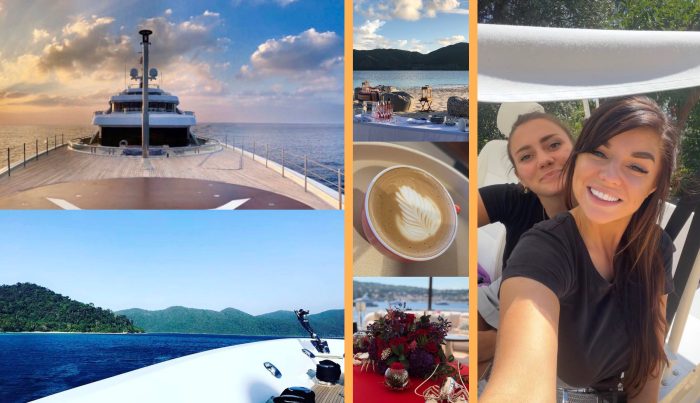
I gradually took positions on larger and larger yachts, so it wasn’t a big shock when I ended up in a 60+ person crew.
I know for most people it can be overwhelming, and a lot of new joiners get lost on a large ship, but I found myself much more comfortable with a big team, where everyone involved was dedicated to mastering their specialised skills.
How is the interior structured on a 100m+ yacht?
Departments are divided, with subdepartment heads managing each area. Stewardesses usually aren’t shared between subdepartments as they aren’t trained in that area.
It takes a little getting used to, as smaller yachts have more of a “one team, one dream” mentality and assist with any duties that need an extra pair of hands.
Which courses made the biggest difference to your career?
I completed various advanced service courses prior to applying for senior positions. I didn’t want to accept a role and not be really confident in my ability to be great at it.
I also highly recommend the WSET Level 2 and 3 to gain wine knowledge and appreciation. Wine is a vast subject and requires a lot of studying to truly understand the product.
A masterclass in high-end service
On the largest yachts, service goes far beyond serving dinner. From tablescapes to cigars and coffee, Annie explains what separates good service from an exceptional experience, and why your previous hospitality experience might count for more than you think.
What makes service exceptional?
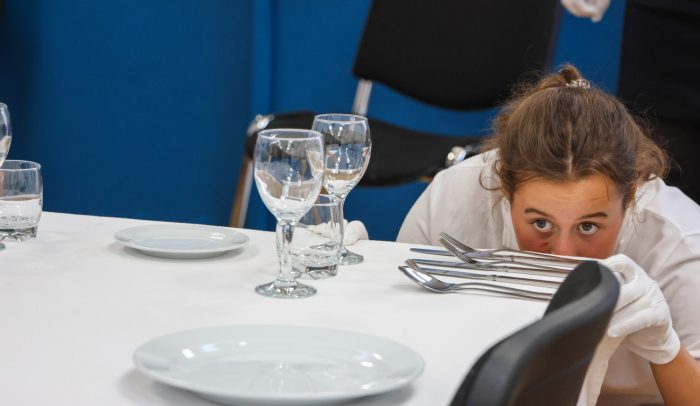
Anticipating guests’ needs is the secret of great service. We should know what they want before they’ve even realised it. Working together with the chefs, every inch of the experience should be seamless without a guest needing to ask for anything at all.
How can previous hospitality experience help?
Cigar service, floristry/table decoration and coffee service are other key focuses, as well as the dining experience. Many people applying for service stew positions don’t realise how transferable these skills are and how previous experience in these areas is hugely beneficial.
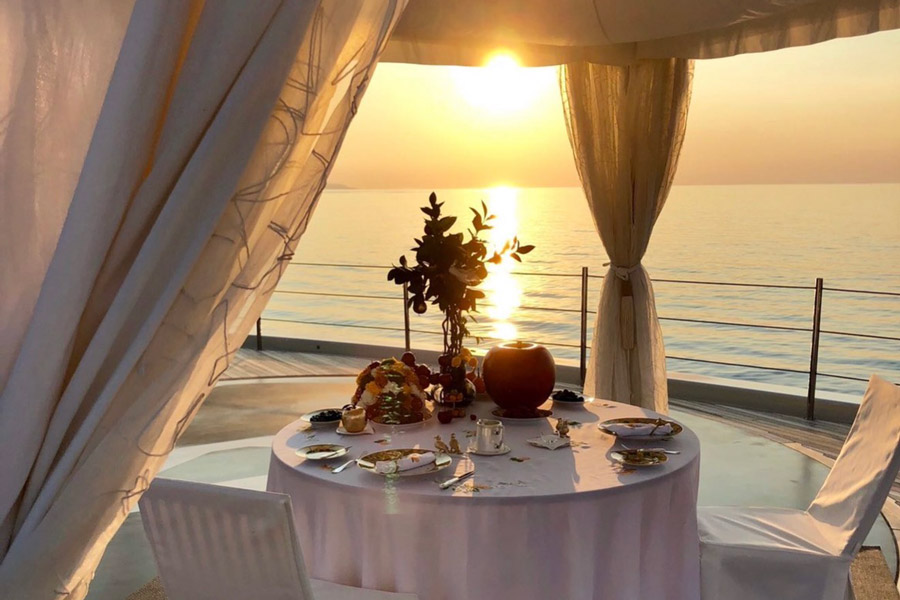
A creative-minded person or someone with floristry skills will be able to put together a tablescape to wow the guests before they are even seated. Having a beautiful table sets the tone and shows the amount of thought put into the whole event.
A luxury hospitality professional will have the knowledge to advise guests on cigar flavour profiles and have the ability to confidently cut and light a guest’s cigar for them.
Someone who is properly barista trained will be able to impress guests with latte art, perfectly textured milk and enough understanding of the roasting process to recommend certain beans. It’s these finer details that really elevate luxury service to a seven-star experience.
What was the hardest part of stepping up to Head of Department?
It’s never fun to be the bad guy! You become very used to socialising and living amongst your team, but when you are suddenly in a senior role there’s a dynamic shift that takes a second to get used to.
When a stewardess makes a mistake and you have to hold them to account, there can’t really be any blurred lines, so there are times when you’re no longer their favourite person.
What do the most successful Stews have in common?
There is a really specific attitude that a stew needs to have to be great at the job: an unwavering work ethic, an inability to complain and an unshakeable positive energy.
The right mindset can get you really far in an industry like yachting. The hours are long and the work can be tough, so only the biggest optimists thrive.
Who were your mentors on board?
I have been so lucky to have had the opportunity to learn from some incredible Chief Stews, Heads of Service, Chefs and Butlers, people who I’ve remained friends with throughout my career.
When working amongst passionate hospitality professionals who have a genuine love for the service industry, it becomes so enjoyable and fluid instead of stressful and rigid.
From Head of Service to the classroom
After 10 years at sea, Annie returned to where her career began, bringing a decade of experience at the top end of the industry to our Superyacht Stewardess Course.
Why did you move into training at Flying Fish?
One of the officers on my last boat fell madly in love with me and asked me to be his wife. The year before our wedding, we found out we were expecting a baby girl. I knew that one day I would leave yachting behind to focus on family life on land, though I hadn’t imagined that I would be working on board until I was 34 weeks pregnant.
It took a lot to convince me to hang up my skort as I just never felt ready to leave, but being a mum is my biggest adventure yet.
Returning to work as an Instructor, representing an industry that I adore amongst a wonderful team at Flying Fish, has been such a rewarding role so far.
I’m really enjoying preparing future Stews for their next steps, arming them with all of the tools I wish I’d had and all of the advice I wish I’d known before my first season.
What do you want every student to leave with?
It’s great to give students a proper understanding of how the industry works so they’re fully prepared. There are so many insights we can give that can not only help people navigate entering the world of yachting but also keep them safe while doing so.
I’d like all the Stewardesses to leave with awareness of risks, guidance on how to get and do the job safely, and the confidence to face the fear and dive in.
Want to train under Annie? Meet her on our Superyacht Stewardess Course in Cowes