
“I’m just going to do my STCW, a friend told me that’s all I need to become a Yacht Stewardess.”
Browse Reddit or Facebook groups and you’ll see that pop up a few times, usually followed by the question: “Are Stewardess Courses actually worth it?”
Technically, their friend is right. The only things you must legally hold to work on a Superyacht are your STCW Basic Safety Training and an ENG1 medical. But the reality is somewhat different, the legal minimum rarely gets you the job. There is a huge gap between being qualified on paper and being the candidate a recruiter, Chief Stew or Captain actually wants to hire, and an even bigger one between getting the job and being able to do it well from day one.
If you’re in a hurry: Legally, you only need an ENG1 Medical and STCW Basic Safety Training to work as a Stewardess on a yacht. Unless you already have years of high-end hospitality experience or a job lined up through someone you know, STCW on its own rarely helps get you your first job. A Yacht Stewardess Training Course includes your STCW, RYA Powerboat Level 2 and VHF Radio qualifications, alongside hands-on interior training. It won’t guarantee you a job, but it gives you the confidence, experience and know-how to find your first role, and importantly, how to keep it.
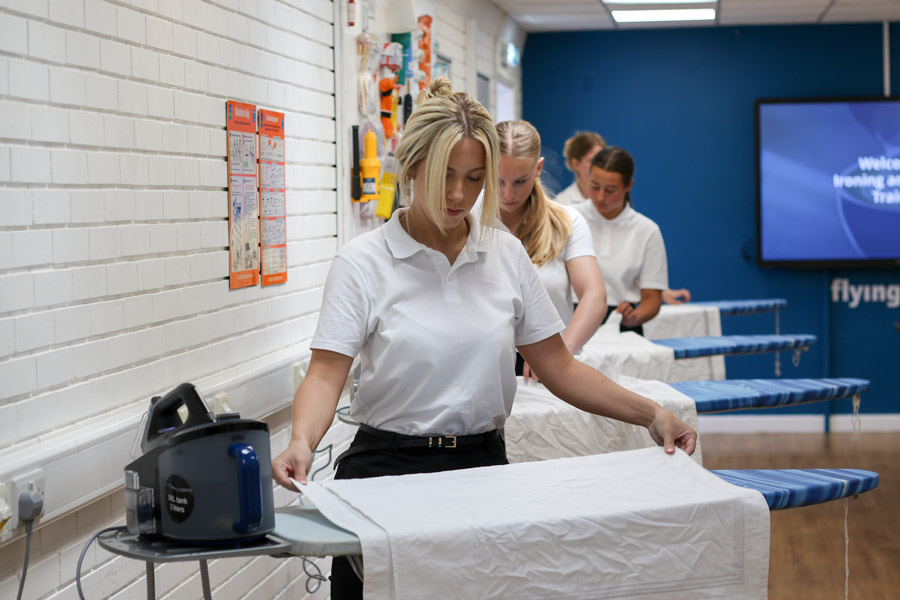
Why is it worth it? One of our Stewardesses remembers a new crew member who had just started on board and was asked to iron a shirt. They’d never been shown how.
It sounds like a small thing, but it led to tears, a long time rebuilding their confidence and a constant worry about losing their job for almost a year.
A course is where you learn these things first. You can make the kind of mistakes that could cost you your job on a yacht somewhere that getting it wrong costs nothing, ask all the questions you want, and practise until it becomes second nature.
This is one example why a Yacht Stewardess Career Course is worth it.
A quick note from us before we dive in
We’ve been running Yacht Stewardess Training Courses since 2012 and train between 200 and 300 new Stews every year. If these courses weren’t ‘worth it’, we wouldn’t still be here well over a decade later! We’re also firm believers in giving honest advice, so let’s look at whether a Stewardess Course is actually right for you.
What STCW does and doesn’t cover
STCW Basic Safety Training is a five-day course that every seafarer must complete. It teaches you how to stay safe and respond to an emergency at sea, covering firefighting, personal survival, first aid, personal safety and social responsibilities, and security awareness. Read more about STCW Basic Safety Training.
It’s a mandatory qualification, and it shows you can keep yourself and others safe on board.
What it doesn’t teach is anything about the job of a Stewardess.
There’s nothing on service, housekeeping or wine appreciation, nothing on looking after guests and no sessions about where and how to look for work. That’s the gap you’ll feel most when finding your first job and your first few weeks on board.
Getting a job is about what you know, or who you know
Getting a job in any industry is tough. You need confidence, experience and the skills to match. Yachting is no different, the people hiring are often choosing between dozens of CVs for a single position.
Knowing the right person makes everything much easier. For most of us, though, getting that first job comes down to proving ourselves with experience and qualifications.
When STCW is enough to become a Yacht Stew
There are two situations where we’ll tell you to get your ENG1 and STCW Basic Safety Training and go and look for work.
The first is if you already have years of high-end hospitality experience. As one of our Stewardesses puts it, if you’ve worked at the Ritz, you’ve practically worked on a Superyacht already. Working in a luxury ski chalet or a fine dining restaurant puts you well ahead of the competition, because you already understand the standard of service guests expect.
You’ll also have been through job hunting before and have a CV that shows it.
For you, it’s an easier decision if you have the confidence to match.
Get your ENG1, your STCW and your RYA Powerboat Level 2, which lets you drive the yacht’s tender, then head to the South of France and start looking for work.
The second is if you have a job guaranteed. It’s not very often this happens, but sometimes students have an uncle who is a captain or whose sister is a Chief Stew. Someone is already vouching for you, so again your ENG1, STCW and probably Powerboat Level 2 are all you need.
Experience that helps get your first role
This middle ground is where most people asking the question sit.
Perhaps you’ve worked behind the bar at your local pub or in a café. That experience is genuinely great, you know how to work under pressure, pour drinks and talk to customers, and it all belongs on your CV. It isn’t the same standard as yacht service, though, and recruiters and captains know you’ll still have much you don’t understand about high end hospitality.
The same goes for skills such as hairdressing, childcare and beauty therapy. These are highly valued skills and will increase your chances of finding work by quite some margin.
However without high-end hospitality experience alongside them, they rarely get you hired on their own. This is where a Stewardess Course fills the gap, giving you the service skills and yacht expectations to sit alongside what you already offer.
Yacht Stewardess Training is not an alternative
A Stewardess Course isn’t an alternative to STCW, because it includes it. You also gain your RYA Powerboat Level 2 and RYA VHF Radio qualifications, with all of the Stewardess training on top.
Powerboat Level 2 matters. On smaller yachts in particular, interior and deck crew often help each other out, and some roles are a mix of both. Being able to drive the tender means you can run guests ashore, help the deck team when they’re stretched, and lend a hand if something goes wrong.
So the real choice isn’t one course or the other. It’s STCW on its own, or STCW plus the skills, experience and confidence to do the job well.
It’s worth being honest about the certificate itself, too. “Superyacht Stewardess Course – Flying Fish” on your CV shows a captain you’re committed, but that line is the smallest part of it. What really makes the difference is what you can do, and how confident you are doing it, once you step on board.
| What’s included | STCW Basic Safety Training only | Flying Fish Superyacht Stewardess Course |
|---|---|---|
| Duration | 5 days | 2 weeks |
| STCW Basic Safety Training | Yes | Included |
| RYA Powerboat Level 2 and VHF Radio | No, booked separately | Included |
| Barista, wine and fine dining service | No | Included |
| Laundry, housekeeping and flowers | No | Included |
| Superyacht CV and job-hunting support | No | Included |
| Post-course mentoring and playbook | No | Included |
| Expert advice from stewardesses | No | Included |
| Best for | High-end hospitality professionals, or people with a job lined up | People who need practical skills and experience |
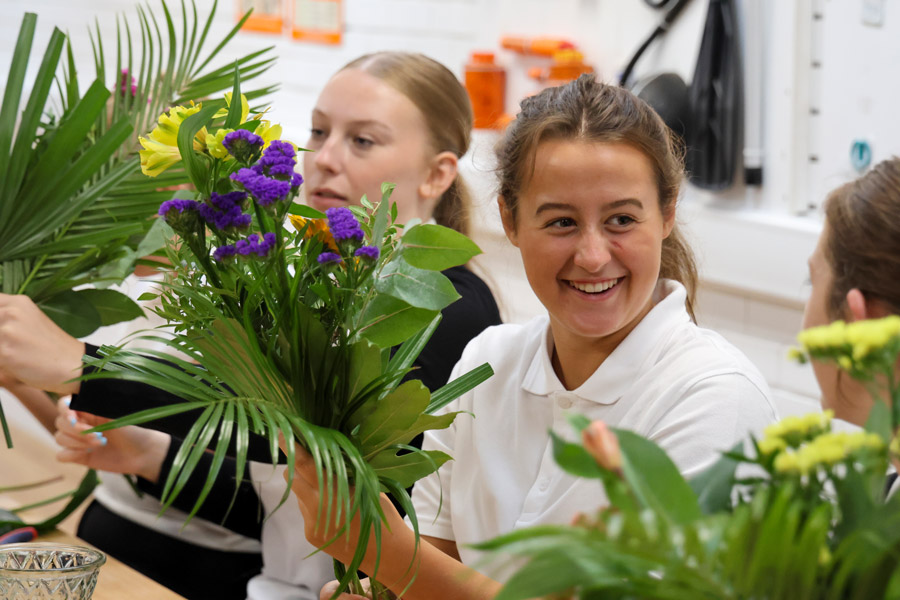
Yacht Stewardess Training is a safe space to make mistakes
Take barista skills as an example.
Maybe you can already operate a coffee machine, or you’ve worked in a café for a while. The making is the easy part.
On a Superyacht you’re not just making coffee, you’re delivering a seven-star experience around the clock.
Do you know how to take an order the seven-star way? Do you know how to serve it? And did you know a guest will usually only expect to be asked once what they’d like? After that, they’ll expect the same drink, made the same way, at the same time every day.
Details like these matter, and without them you’ll find the job hard.
The same is true of almost everything a Stew does, from table presentation and cocktails to making a bed.
Flowers are a good example. You might be able to arrange a vase, but have you arranged one to survive the yacht moving at sea, and still look perfect when the guests come down for breakfast?
Then there’s organisation. When a small interior team is looking after a yacht full of guests around the clock, everything runs on routines, rosters and knowing exactly what comes next.
Working it out as you go is hard.
There’s almost an art to how things are done on a yacht, and if you haven’t experienced it before, it can come as quite a shock.
Impress from day one – The confidence you’ll need
If you don’t know, you don’t know. You won’t be walking into your first job blind. You’ll arrive knowing what you’re walking into, so you can get stuck in and impress from day one.
Choose a good provider and you’ll spend your course with experienced Stewardesses who have actually worked on Superyachts.
They’ll help you build a CV that works for yachting, share first-hand stories from their time on board, and tell you what to do and what not to do. They’ll also walk you through the exact steps to finding your first job, including how to stay safe while you’re looking.
The advice doesn’t stop when the course ends, either. On our course, graduates can email our Stewardesses for tips and guidance while they look for their first role.
Landing your first job in Antibes or Palma can feel daunting if you’re doing it alone, so we don’t just hand you a certificate and wish you luck. Before you leave, we give you our playbook, covering which crew houses to book, which crew agents to visit first and how to go dockwalking safely.
You’ll also join our private graduate network, where past students, captains and our team share job leads and crew opportunities.
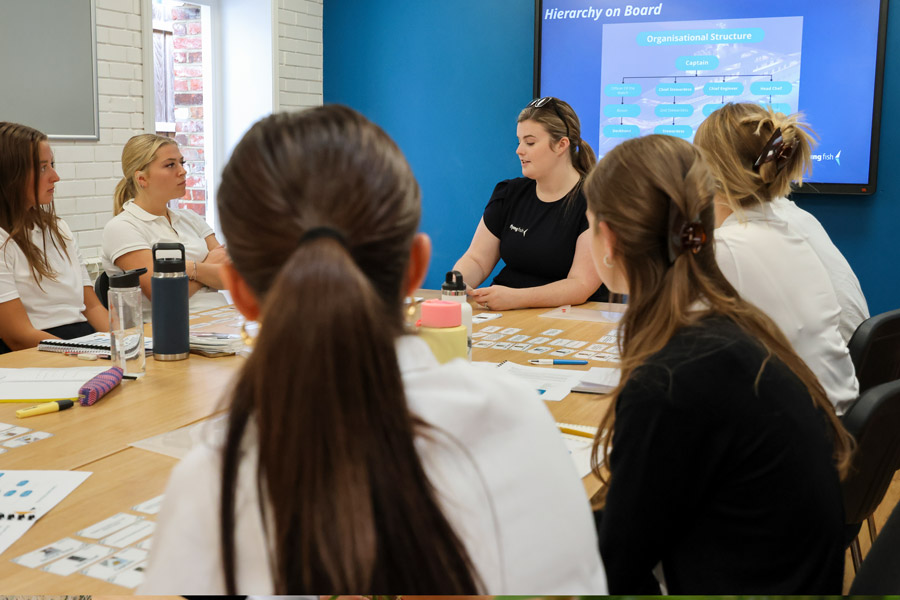
Networking – The hidden benefit
People also just really enjoy training with us.
You’ll leave with the skills, confidence and knowledge to land your first yacht job, but you’ll have a brilliant time getting there too. You’ll live together, train together and socialise together. It’s intense, but it’s a lot of fun!
Students make best friends on the course, and there are often tears when it ends. It’s a big part of why we have over 300 five-star reviews on Google.
Because you train, live and socialise together in Cowes, you won’t just leave with qualifications. You’ll leave with a network. Many of our graduates head out to Antibes or Palma together, sharing accommodation and job hunting as a team, which takes a lot of the worry out of going it alone.
What is right for you?
If you have high-end hospitality experience or a job waiting for you, save your money.
Get your ENG1, STCW and Powerboat Level 2, and start applying.
If you don’t, a Stewardess Course gives you the STCW you need, plus the skills, experience and confidence to find your first job, and to keep it.
The final option is to contact us, send over your CV, we can offer some more tailored advice on the best route for you, based on your experience and career goals.