
A Sole Stewardess is responsible for the entire interior operation and guest experience on a yacht, typically on smaller motor or sailing yachts where there is no interior team.
Often single-handedly managing everything from housekeeping and laundry to service, provisioning and crew uniform care, a Sole Stewardess is typically responsible for 2–10 guests and combines the duties of Chief, Second, and Junior Stewardess into one role.
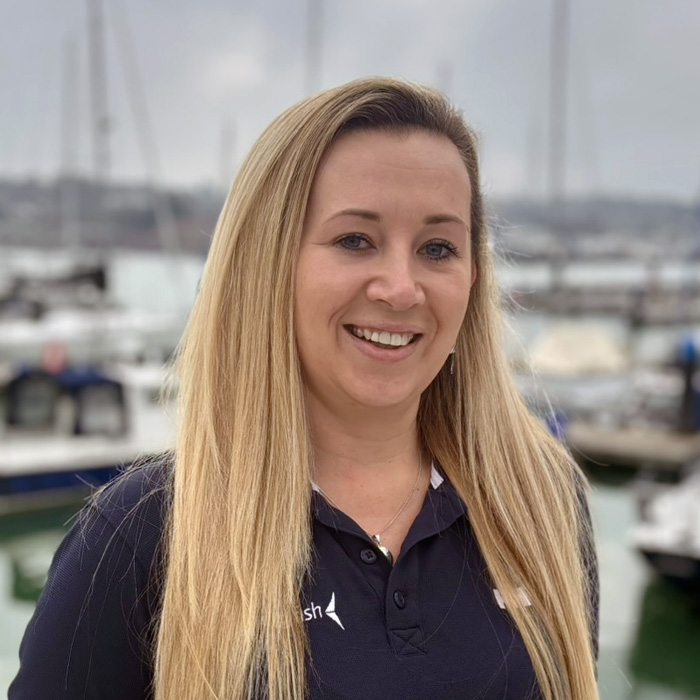
This guide draws on first-hand experience from Colette, a Flying Fish instructor who worked as a Sole Stewardess for six years on sailing yacht Saudade.
What follows is an honest account of what working solo actually looks like, day to day.
Is the Sole Stewardess role right for you?
This role is defined by responsibility and trust. If you enjoy making decisions, working independently, and seeing the direct impact of your work, the Sole Stewardess role can be one of the most rewarding positions on a Superyacht.
Why people love this role:
- Full ownership of the interior and guest experience
- High autonomy, trusted to manage your own schedule and priorities
- Direct recognition from owners and guests
- Fast development in time management, organisation, and decision-making
- Pride in delivering a complete experience single-handedly
- Often better pay and closer owner relationships than team-based roles
Who may struggle:
- Anyone who relies on teamwork for motivation or energy
- Those who need constant direction or close supervision
- People uncomfortable making decisions alone
- Anyone expecting flexibility in hours rather than autonomy in structure
- Those who struggle with sustained responsibility over long periods
The scope of responsibility
The Sole Stewardess role involves full responsibility for maintaining interior standards, ensuring guest satisfaction, managing crew uniforms (particularly relevant on race boats or professional yacht programmes), and being accountable when things go wrong.
There’s no one else to share the load with or deflect to.
This level of accountability shapes how you approach every task. You’re not just completing a checklist. You’re managing the entire interior operation as if it were your own small business.
On racing yachts or professionally run programmes, this responsibility can extend beyond guests to supporting the wider onboard team. On Saudade, which also raced, Colette was responsible for managing interior standards and uniforms for the racing crew.
Who you report to and who helps
In most cases, a Sole Stewardess reports directly to the Captain, who sets expectations around standards, guest experience, and daily priorities.
Day to day, support can vary depending on the yacht. Deckhands will often help with interior tasks when needed, particularly during busy guest periods or turnarounds, but this support is usually ad hoc rather than structured.
On the yacht Colette worked on, she worked very closely with the Chef. The two of them functioned almost like a two-person team, supporting each other during service and busy periods.
How much support you receive depends heavily on crew culture, personalities and how the Captain prefers the yacht to run.

What changes when you’re working alone
The most significant shift when working solo is complete ownership of the interior. On a fully crewed yacht, tasks are distributed and there’s natural coverage when someone needs a break.
As a Sole Stewardess, guest days are full days. You rest when the guests rest, and if you’re unwell, there’s no cover.
“If I was ill, there was no one to step in,” Colette explains. “You still had to find a way to get through the day.”
This doesn’t mean you’re on duty 24/7. Most yachts have protocols for downtime and rest periods. But the responsibility doesn’t shift to anyone else. The interior operation relies entirely on you being present, organised, and capable.
The Sole Stewardess role
The most challenging part of working as a Sole Stewardess is multitasking, especially during meal times. Guest expectations don’t pause while interior tasks are being completed. Bed turn-downs, cabin preparation, and service often happen at the same time.
“I’d be turning down beds while guests were waiting for dinner, then rushing out to serve the meal, then going straight back to finish everything else,” Colette says. “You’re constantly needed where the guests are, even if other interior tasks are unfinished.”
This creates intense pressure to manage time and priorities carefully. Learning to anticipate what’s needed next and building systems that allow you to prepare in advance becomes essential.
The first few months are typically the hardest.
Once routines are established and you’ve learned to read guest patterns, the mental load becomes more manageable.
Daily workload and what never changes
Laundry runs every single day.
Mornings start early, often by getting the first load on, then moving straight into unloading dishwashers and resetting the galley and interior spaces before guests wake.
The intensity of the workload shifts depending on whether guests are onboard. Guest days mean full service, constant movement, and very little opportunity to pause. Non-guest days offer breathing space for deeper cleaning, inventory checks, and restocking, but they’re never truly “quiet” days.
Even during periods without guests, there’s always laundry from crew, maintenance cleaning, and preparation for the next charter or trip. The work doesn’t stop. It just changes shape.
Physical demands and the importance of posture
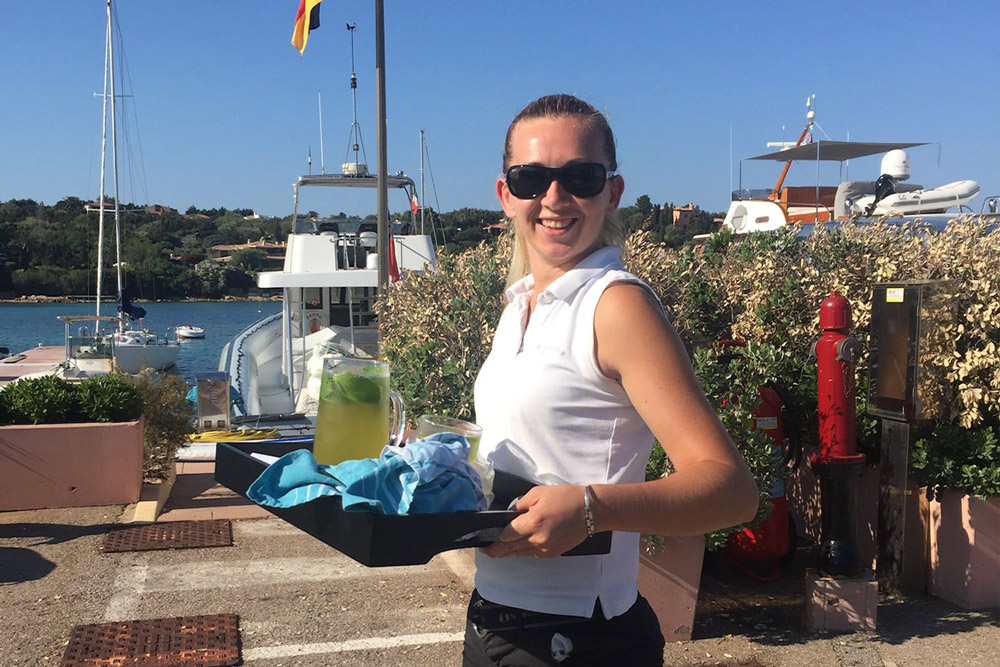
The physical demands of the role are most obvious during service. Carrying plates repeatedly, clearing tables, and moving between galley and guest areas requires constant attention to posture to avoid injury.
Lower back strain is common in service roles, and without a second Stewardess to rotate tasks with, the physical load is continuous.
“You learn very quickly to be mindful of how you’re lifting and carrying,” Colette notes. “Otherwise your back pays for it later.”
Awkward cleaning tasks such as exterior windows, tight storage lockers, or reaching under furniture add to the strain. Staying physically fit and being mindful of lifting technique makes a significant difference to sustainability in the role.
Mental load, fatigue and long-term sustainability
Fatigue builds differently when working alone. Long hours are expected across yachting, but when you’re the only person managing the interior, the mental load increases as you get tired. Decision-making becomes harder, small mistakes happen more easily, and the pressure to keep standards high doesn’t ease.
There are weeks without proper breaks, particularly during busy charter seasons. However, once systems are established and you’ve built a strong working rhythm with the Chef and Captain, the role becomes more sustainable.
Colette sustained it for six years, proof that the role can be maintained long-term, provided you develop strong organisational habits and work on a yacht with a supportive crew dynamic.
Service standards when working solo
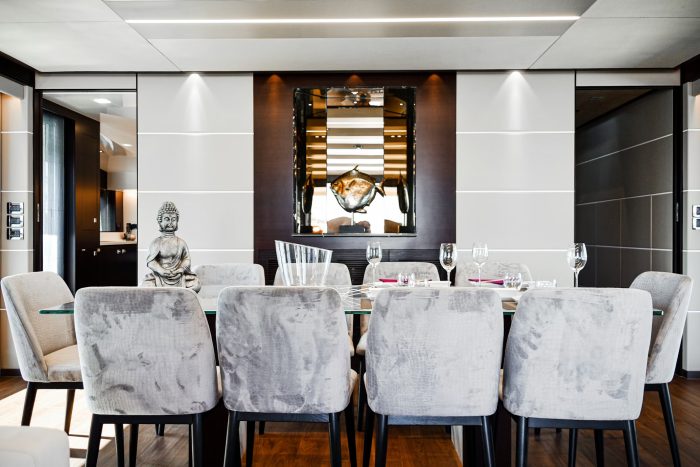
Despite working alone, service standards are expected to match those of fully crewed yachts. Guests don’t adjust their expectations based on crew numbers. The table should still be beautifully set, service should still be seamless, and the interior should still be immaculate.
The Sole Stewardess liaises closely with the Chef on meal timings, plating, and presentation. Decisions around crockery, glassware, and table styling fall to you. The standard doesn’t drop because you’re working solo. If anything, the visibility of your work means standards have to be consistently high.
Housekeeping, laundry and crew uniforms
The Sole Stewardess is responsible for all interior areas, including crew cabins and shared crew spaces. This means you’re maintaining the entire boat’s interior to a high standard, not just guest-facing areas.
Guest laundry, bed linen, towels, and crew uniforms all have to be washed, dried, folded, and returned efficiently. Uniform management is particularly important on a professional yacht. Keeping crew uniforms clean, pressed, and ready requires planning ahead, especially during busy periods when laundry machines are constantly running.
Provisioning, inventory and admin
Managing interior inventory independently means using spreadsheets to track stock levels for cleaning products, guest toiletries, linens, and interior supplies. Computer skills and organisational systems become essential. Without them, it’s easy to run out of something critical mid-charter.
The solution is to over-order slightly on non-perishable items, as resupplying isn’t always straightforward depending on the yacht’s location. Some stock, particularly specialised cleaning products or specific guest-preferred brands, may need to be ordered up to six months ahead to avoid shortages.
This administrative side of the role often surprises people. It’s not just cleaning and service. It involves budgeting, supplier relationships, and forward planning.
Autonomy and decision-making
Working as a Sole Stewardess comes with a high degree of autonomy. There’s no micromanagement. The Captain trusts you to know what needs doing and to manage your own schedule around guest and yacht needs.
Occasionally, the Captain will give direction, particularly around guest preferences or specific requests, but day-to-day, you’re expected to operate independently.
You need to be self-directed and confident making decisions without external validation.
A day in the life
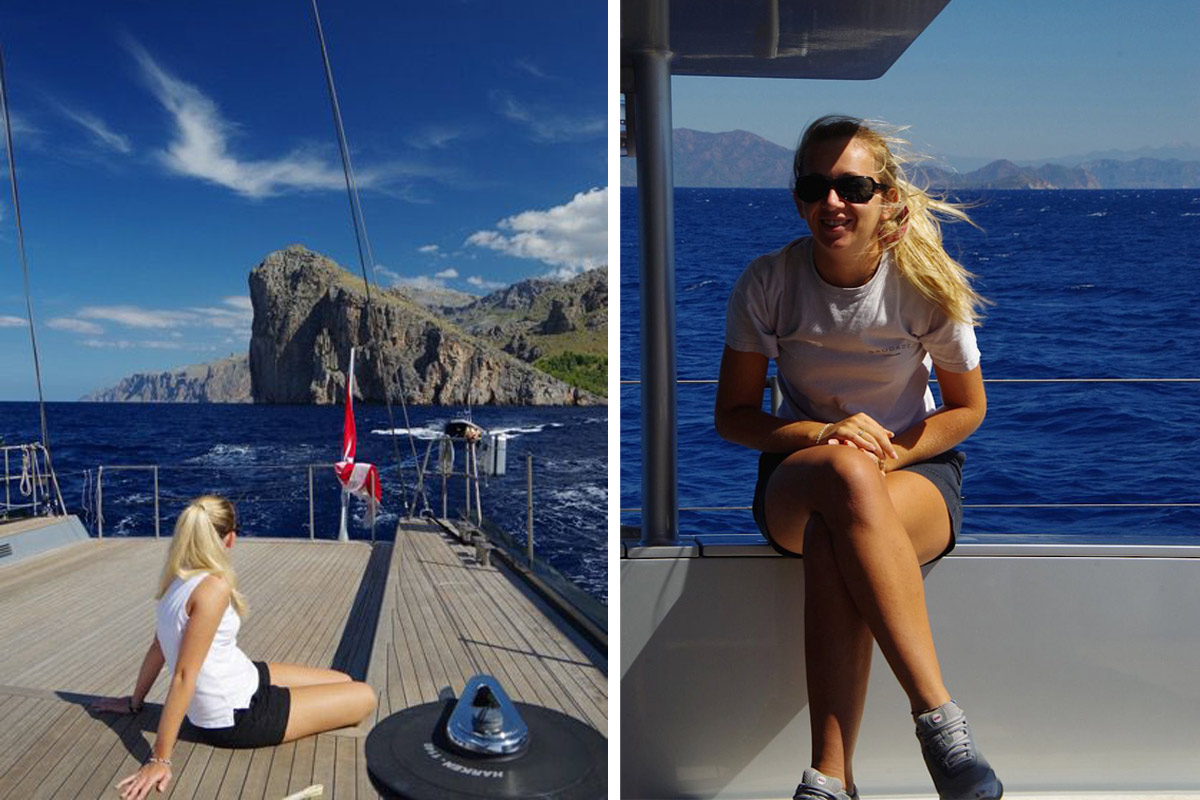
A typical day for a Sole Stewardess on guest days looks something like this:
06:30 – Wake up. Start the first load of laundry (usually bed linen or towels from the previous day).
07:00 – Unload dishwashers, reset the galley, wipe down surfaces, prepare for breakfast service.
08:00–10:00 – Serve breakfast, clear and clean, liaise with Chef on lunch and dinner plans.
10:00–12:00 – Guest cabin service (making beds, cleaning bathrooms, restocking toiletries, tidying). Rotate laundry loads.
12:00–14:00 – Lunch service. Clear and clean.
14:00–17:00 – Deeper cleaning tasks (interior windows, vacuuming, restocking linens). Continue laundry. Provisioning or inventory checks if needed.
17:00–19:00 – Evening cabin preparation (turn-down service, fresh towels, setting up for the evening).
19:00–22:00 – Dinner service. Often the busiest and most intense part of the day.
22:00+ – Final clear-down. Guests to bed. Finish any remaining laundry or dishwasher loads. Prep for the next day.
On non-guest days, the rhythm shifts. There’s more time for deeper cleaning, restocking, and maintenance tasks, but the day still starts early and finishes late.
Skills and personality fit
The role suits people who are naturally independent, highly organised, and comfortable with sustained responsibility. Multitasking is non-negotiable. You’re constantly switching between tasks and environments, often mid-action.
Self-motivation is essential. There’s no team dynamic to keep you moving, and no one else to pick up slack if you’re having a slow day. For the right personality, the role offers complete ownership of your work and the satisfaction of knowing the guests’ experience is entirely down to your skill and effort.
What yachts suit the Sole Stewardess role
The Sole Stewardess role is most common on motor yachts under 30 metres or sailing yachts under 50 metres. These yachts are typically owner-operated or have small, regular guest groups, often family rather than large charter parties.
Pay, recognition and owner relationships
Pay for Sole Stewardesses can be generous, often higher than Second Stewardess roles on larger yachts, and sometimes comparable to a Chief Stew position.
In Colette’s case, working closely with owners and the Captain made it easier to demonstrate value and negotiate pay.
The visibility of the role means your efforts are recognised.
When the interior looks immaculate and service runs smoothly, it’s clear who’s responsible.
Owners and guests often develop strong working relationships with their Sole Stewardess, which can lead to long-term positions and genuine job satisfaction.
Career value and progression
Working as a Sole Stewardess accelerates development in time management, organisation, and decision-making faster than most team-based interior roles.
Captains respect the role. They understand the pressure and the skill required to maintain high standards alone.
However, Colette notes that it’s less clear how recruiters and crew agencies view the role when it comes to career progression. Some see it as excellent preparation for Chief Stewardess roles, others worry that working solo doesn’t demonstrate team leadership skills. Opinions vary.
What’s undeniable is that many Sole Stewardesses remain in the role long-term. Once you’ve found a good boat with supportive crew and reasonable owners, there’s little incentive to move to a larger, more chaotic yacht where you’d be one part of a bigger team.
How the Sole Stewardess role compares to other interior positions
Working as a Sole Stewardess is roughly equivalent to combining the responsibilities of Chief, Second, and Junior Stewardess into one role. The workload is heavier than a Second Stew position, and the accountability is greater than a Chief Stew role on a small yacht, because there’s no team to manage.
Just you, doing everything.
Compared to a Chief Stewardess managing a team of two or three, the Sole Stewardess has more direct control but less leverage. You’re doing the physical work yourself, not delegating it. That can be both liberating and exhausting, depending on the day.
Why Colette stayed a Sole Stewardess for six years
Colette describes the role as one defined by ownership, pride, and recognition.
The satisfaction came from knowing that when the interior looked immaculate, when service ran seamlessly, when guests left happy, it was her work that made it happen.
“When the interior looked perfect and guests were happy, it was because I’d done it,” she says. “It was just me, and that gave me a huge sense of pride.”
The role isn’t for everyone. It’s physically demanding, mentally intense, and requires a personality that thrives under sustained responsibility.
But for those suited to it, working as a Sole Stewardess offers something increasingly rare in yachting: full autonomy, direct recognition, and the chance to develop skills that transfer across the entire interior department.
If you’re considering the role, the best advice is simple: be organised, build systems early, and make sure the yacht culture supports independent work. The rest takes care of itself.
Thinking about a career in yachting? You’ll need your STCW Basic Safety Training and to maximise your chance of finding work, most people opt for our Stewardess Course which includes STCW plus interior training.
Find out more about requirements and interior career pathways, or explore our guide to Superyacht salaries to understand what you could earn as you progress through the industry.