
Name: Harry Butterworth
Role: Deckhand / Personal Trainer
Vessel: 85m Private & Luxury Charter Yachts
Starting Point: RNLI Lifeguard
Courses: Flying Fish Superyacht Deckhand Course & Flying Fish Yachtmaster Power Course
Six seasons as an RNLI Beach Lifeguard gave Harry a love of the sea, but he wanted a career that would take him further.
Harry joined our Superyacht Deckhand Training Course, landed a job on an 85-metre private yacht and now combines deck work with running personal training sessions for guests and crew on a charter yacht.
He recently returned to Flying Fish for his Yachtmaster Power Offshore, the next step towards becoming an Officer of the Watch.
We caught up with Harry to hear how he got his foot in the door, how he keeps fit at sea and his advice for anyone about to take the leap.
What made you choose a career at sea?
Before joining the Superyacht industry, I spent six seasons working as an RNLI Beach Lifeguard, so I’ve always loved being around the sea and working in that environment. When I felt ready for a new challenge and a change in career, yachting seemed like a natural next step.
What really attracted me was the opportunity to combine work with travel, explore new places, meet like-minded people and experience things I might not otherwise have had the chance to.
I’ve always loved travelling and being active, so the idea of building a career that allowed me to do both was appealing.
Why did you choose the Flying Fish Deckhand Course?
I first heard about Flying Fish through friends who had already completed the course and were working in the industry. Hearing about their experiences and how the training had helped them was a massive factor in my decision.
What stood out to me was how comprehensive the course was. Rather than just offering the basic STCW qualifications, Flying Fish provides a range of additional training that gives you a really strong foundation before entering the industry.
I felt this would not only prepare me better for life on board but also help my CV stand out to potential employers.
What were the highlights of your training?
There were so many highlights that it’s difficult to pick just one. From the accommodation and the training itself to the friendships made along the way, the whole experience was brilliant.
One thing I particularly appreciated was how we were treated throughout the course. We were given responsibility and encouraged to approach things with the same attitude and professionalism expected on board a yacht. That really helped prepare me for the realities of working in the industry and gave me a lot more confidence going into my first role.
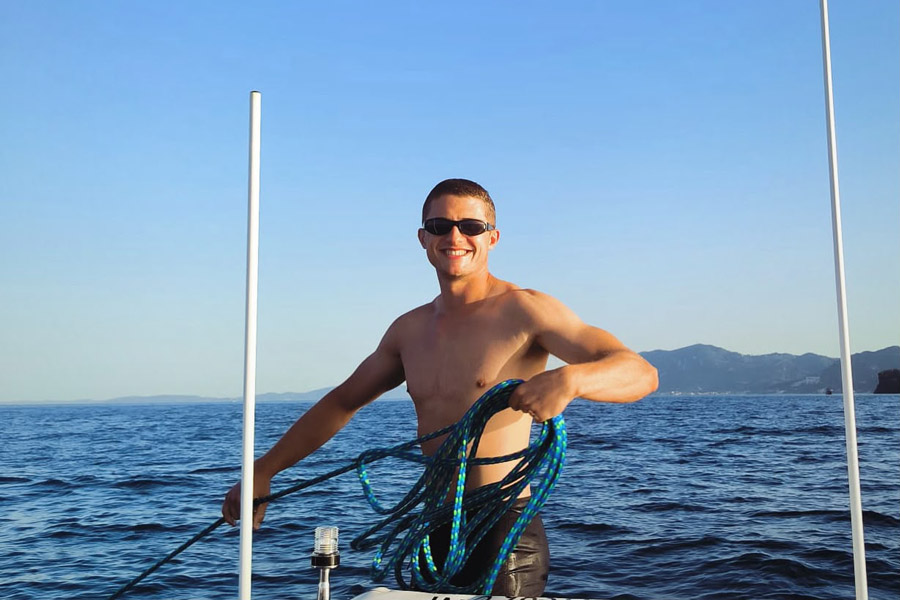
The Facebook post that bypassed dockwalking in Antibes
For most new crew, the job hunt involves flying to yachting hubs like Antibes or Palma, securing a bunk in a crew house, and walking the docks at dawn hoping to pick up day work. Harry prepared for that exact grind, signing up with multiple crew agencies, polishing his CV, and booking a one-way ticket to France….
How did you land your first job?
There are many different routes you can take when trying to secure your first job. For me, I signed up with as many crew agencies as possible and made sure my CV was as strong as it could be. I also booked a flight to Antibes with the intention of dock walking and meeting people in the industry.
However, I was fortunate enough to secure my first position before I even got on the plane!
I had posted on a yachting Facebook group, sharing a few photos of myself playing sports, working as a beach lifeguard and a professional CV-style photo. Interestingly, I didn’t actually post my CV.
A Bosun from an 85-metre private yacht reached out to me, and that opportunity eventually became my first job in the industry.
It just goes to show that putting yourself out there and showing a bit of your personality can make a real difference.
What challenges did you face starting out?
Starting from scratch in any industry can be daunting, but I think one of the biggest challenges in yachting is simply getting your foot in the door and getting in front of the right people.
It’s a competitive industry, so networking, showing a willingness to learn and demonstrating a strong work ethic are important.
Once I was given my first opportunity, I made sure I made the most of it. I worked hard, asked questions, listened to those around me and pushed myself to learn as much as possible.
I think having the right attitude and being willing to put the work in can take you a long way.
How did your training help you on board?
The Flying Fish training was a massive confidence builder for me. It gave me the knowledge, practical skills and understanding needed to build a strong foundation for my career.
When I stepped on board my first yacht, I already had a basic understanding of many of the procedures and expectations, which made the transition into the industry much easier.
I definitely feel that what I learned during my time at Flying Fish allowed me to develop my skills and progress at a faster pace once I started working.
How have you progressed since then?
Since joining the industry, I’ve developed both professionally and personally, and I’ve been fortunate enough to be trusted with increasing levels of responsibility.
I started out as a junior deckhand, learning the fundamentals of working on board, and have since progressed into a Deckhand/Personal Trainer role on one of the most talked-about charter yachts in the industry.
It’s been an amazing journey so far, and I really enjoy the variety that comes with my current role. Being able to combine my passion for fitness with my career at sea is something I’m incredibly grateful for.
What’s been your proudest moment?
There have been many memorable experiences, but one of the things I find most rewarding is being part of a team working towards a common goal.
The level of teamwork, communication and coordination required to keep a superyacht operating smoothly is pretty incredible. Every person has an important role to play, and seeing everything come together successfully is hugely satisfying.
For me, being trusted with responsibility and knowing that you’re contributing to the bigger picture is something I’m really proud of.
What have you learned, and what do you love about life at sea?
I’ve learned an incredible amount since joining the industry, and I’m still learning something new almost every day.
One of the biggest lessons has been the importance of attention to detail. In yachting, it’s often the smallest things that make the biggest difference, and maintaining high standards in everything you do is such an important part of the job.
It’s something I’ve really developed over time and a skill that carries over into so many other aspects of life.
As for what I enjoy most, it’s definitely the people and the experiences you share together. Working and travelling alongside friends, experiencing new places and creating memories along the way is what makes life at sea so special.
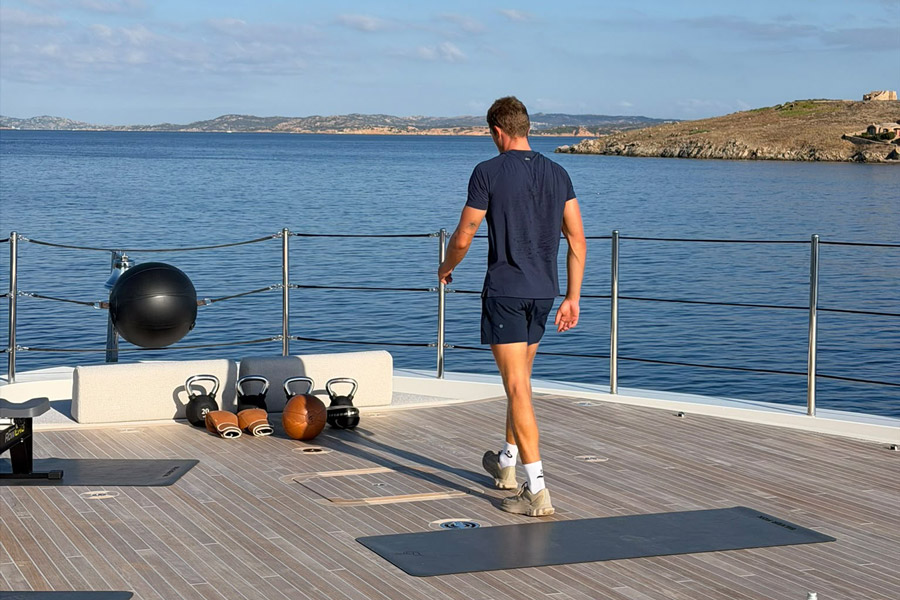
Carving a niche: Becoming the onboard Deckhand/PT
After cutting his teeth as a junior deckhand on an 85-metre private yacht, Harry found a way to bring his lifelong passion for fitness into his work, combining deck duties with personal training for guests and crew on a charter yacht.
Where does your passion for fitness come from?
I’ve had a strong passion for fitness from a young age. It originally came from wanting to become stronger, fitter and more functional for the sports I played growing up.
Over time, that developed into a genuine love for training, not just for the physical benefits but also for the positive impact it can have on your mindset and the way it brings people together.
Fitness plays a huge role in my everyday life, especially working on board. Yachting can be a physically demanding industry, so having a good level of strength and general fitness makes a real difference when carrying out day-to-day duties.
How do you stay fit at sea?
Staying fit and active has helped me throughout my career at sea, not only in maintaining my physical fitness but also in helping reduce the risk of injuries and keeping me feeling good mentally.
One of the biggest challenges in yachting is maintaining a consistent routine, especially during busy charters or trips when your working hours can be unpredictable.
That’s actually something I’m trying to promote through my Instagram and social media. I want to show people that fitness doesn’t have to mean training for hours every day or following a perfect routine.
It’s about making time to move when you can. Even 20 minutes of exercise can make a real difference to how you feel, both physically and mentally.
For me, training is also a chance to switch off, have a bit of time to myself and create some structure in what can sometimes be a very busy lifestyle.
How can crew look after their physical and mental wellbeing?
I think having some form of routine and making time for physical activity is important, especially in an industry where you’re often working long hours and spending extended periods away from home.
Exercise isn’t just about looking good or improving your fitness. It’s also about giving yourself some structure, clearing your head and feeling better mentally.
My biggest piece of advice would be to keep things simple and realistic. You don’t need to train every day or put pressure on yourself to follow a strict programme. Just make an effort to move whenever you can.
There will definitely be days when working out is the last thing you feel like doing, but more often than not, once you’ve finished, you’ll feel so much better for it.
What does a normal day look like for you?
Whenever we have the opportunity, I try to organise crew workouts on board. These are usually fun, circuit-style sessions out on the bow, getting everyone moving and enjoying themselves.
It’s a great way to bring the crew together, boost morale and encourage people to stay active. I think fitness can be a really positive social activity, especially when you’re all living and working together.
A typical guest-on day for me can involve starting the morning with a few personal training sessions for guests, before moving into my Deckhand responsibilities for the remainder of my shift.
That’s one of the things I love about my role. Every day is different, and I get to combine two things I’m really passionate about.
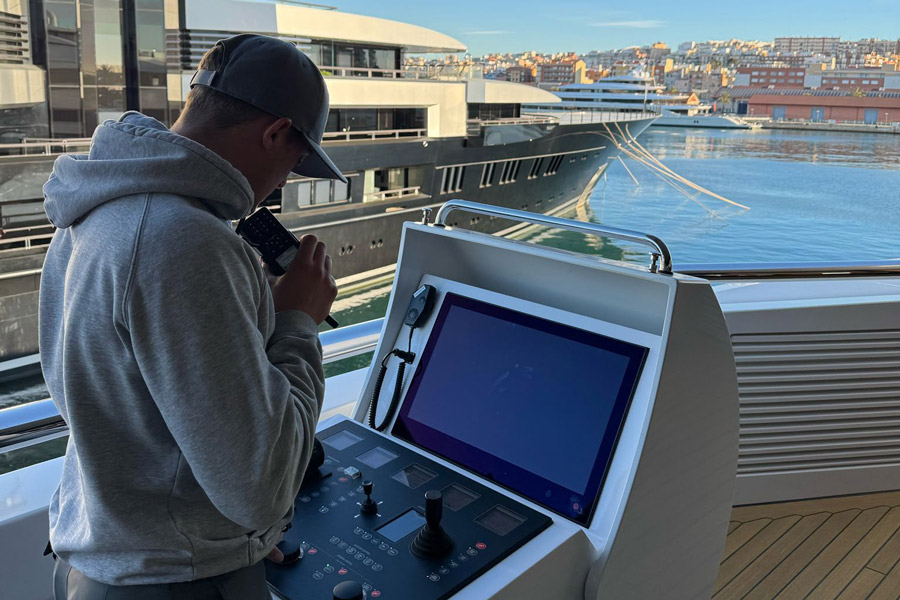
Levelling up: Returning for Yachtmaster Power
Having proven himself on deck and with guests, Harry set his sights on the bridge. His goal is to qualify as an Officer of the Watch (OOW), taking responsibility for navigational watches, and Yachtmaster Power Offshore is a key step on that path.
Why did you come back to Flying Fish for your Yachtmaster?
Having had such a positive experience with Flying Fish during my initial training, returning for my Yachtmaster qualification felt like an easy decision.
The instructors are fantastic, and I knew that training with them again would give me the best possible preparation for both the course and the practical exam.
I wanted to put myself in the strongest possible position to succeed, and I felt Flying Fish was the right place to do that.
I couldn’t recommend the Yachtmaster preparation week and course enough. The knowledge and experience of the instructors really make a difference.
How did your experience on board help with Yachtmaster?
Before starting my Yachtmaster training, I made a conscious effort to make sure I knew the Collision Regulations, or rules of the road, inside out.
Alongside this, the practical experience I’d gained working on yachts and completing mileage-building trips was valuable.
Spending time on the water helped develop my boat-handling skills, situational awareness and understanding of how the Collision Regulations apply in real-life situations.
Returning to Flying Fish with more experience under my belt was great because I could approach the training with a much better understanding of the industry and build on the knowledge I’d already gained.
How will Yachtmaster Power Offshore help your career?
Achieving my Yachtmaster Offshore qualification is an important step in my career progression.
Not only has it helped develop my confidence and ability on the water, but it’s also a valuable qualification for progressing through the ranks.
It’s particularly important for me as I want to work towards my Officer of the Watch (OOW) qualification, and Yachtmaster Offshore is a key part of that progression.
What are your ambitions?
My main ambition is to continue progressing, developing my skills and taking on more responsibility within the industry.
Over the next three years, I’d love to be well on my way towards achieving my OOW qualification while continuing to develop my personal training career.
I’m really enjoying combining the two roles at the moment, and I’m excited to see how far I can take the fitness side of things within the superyacht industry.
What advice would you give someone considering the Flying Fish Deckhand Course?
100% go for it! It’s an incredible industry to be part of, and it’s genuinely changed my life in so many positive ways.
I completely understand that taking the leap can feel daunting, especially when it means moving away from home and stepping into something completely new. But the opportunities and experiences that come with it are amazing.
You’ll meet some incredible people, make friendships that will last a lifetime and visit places you might never have imagined seeing. I really couldn’t recommend it enough.
There are many pieces of advice I could give, but I think the most important thing is to have a strong work ethic and a good attitude.
Work hard, listen to the people around you, ask questions and never be afraid to make mistakes. You’re not expected to know everything when you first start, but showing that you’re willing to learn and improve is so important.
I’d also really encourage people to network as much as possible. Put yourself out there, speak to other yachties, connect with crew agencies and take every opportunity to meet people in the industry.
Yachting is a surprisingly small world, and your reputation really does mean everything. If you work hard, treat people well and build a good name for yourself, it can open so many doors.
And lastly, make sure you enjoy it! It’s such a unique industry, so have fun, embrace the experiences and make the most of every moment.
Has Harry’s story inspired you to work on Superyachts? His journey started on our Superyacht Deckhand Course, and yours could too.
Not sure where to start? Download our free guide